

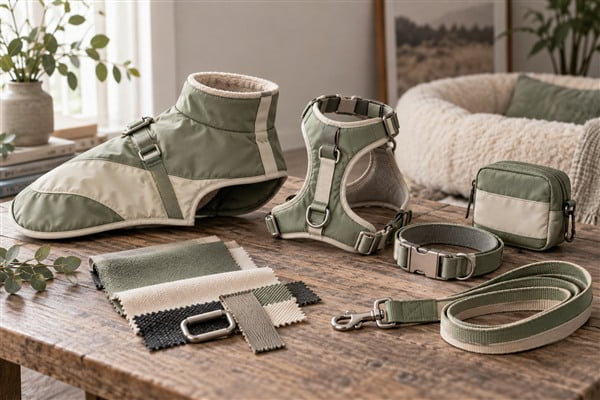
A matching collection can simplify a brand’s appearance and purchasing, but shared colors do not automatically justify shared materials. A jacket shell, harness panel, collar strap, and pouch serve different functions. Brands developing pet sets and bundles should decide where common materials help and where product-specific construction must remain.
Share materials only after reviewing function, interfaces, performance, care, and supply requirements for every affected product. Standardize deliberately, while preserving the construction each item needs.
What should a shared-material plan contain?
Create a matrix showing each material code and the products that use it. Record supplier, grade, color, width or weight, thickness, finish, minimum quantities, and approved alternatives. Separate visual coordination from true material identity.
BioThane material FAQs illustrates the importance of precise material naming: a branded coated webbing is not interchangeable with any similar-looking strap. Retain supporting purchasing information when a branded claim is part of the collection.
Consider fixed versus mix-and-match sets when forecasting shared components. A configurable range may draw on the same stock for several combinations, while prepacked sets commit components earlier. The material plan should reflect how the collection is actually sold and assembled.
Where can standardization create a useful saving?
A shared color family, approved fabric source, or compatible trim can reduce the number of decisions and purchasing lines. It may also improve repeat-order consistency. Verify those benefits against actual order quantities and product consumption rather than assuming every shared material reduces cost.
Review customization options at collection level. Identify which details can remain common without creating unnecessary bulk, awkward adjustment, poor drape, or unsuitable sewing. A pouch’s appearance requirement is different from a load-bearing strap’s role.

Allow exceptions where they serve a clear purpose. A jacket may need different lining or ease, while a harness needs its own reinforcement and panel geometry. Explain those differences in the specification so visual matching does not encourage unapproved substitutions.
Which performance checks remain product-specific?
ASTM D6775 webbing test method addresses webbing material strength and elongation, while ASTM D1683 for woven sewn seams covers applicable woven seams. A shared material result can inform several decisions, but each assembled product still needs evaluation against its own construction and use.
Check the interfaces: strap through buckle, fabric around an opening, padding under a closure, and hardware against a finished surface. The same thickness or finish may work differently when folded, stitched, printed, or compressed.
For color coordination, use an approved reference and consistent viewing conditions. Different textures and surfaces may appear different even when they use a similar color target. Record acceptable visual variation rather than promising an exact match across every material.
How should care and color transfer be evaluated?
The ISO 105-X12 rubbing-fastness method provides a reference for relevant color-transfer assessment. Include contacts between shared dark materials and lighter linings, bindings, or packaging where appropriate. A problem in one combination should trigger review of other products using that contact pair.
Use defined care conditions, with ISO 6330 washing and drying procedures and the ISO 5077 dimensional-change method as references where suitable. Check the completed products afterward. Similar raw materials do not guarantee identical care behavior when different layers, trims, and assembly methods are involved.
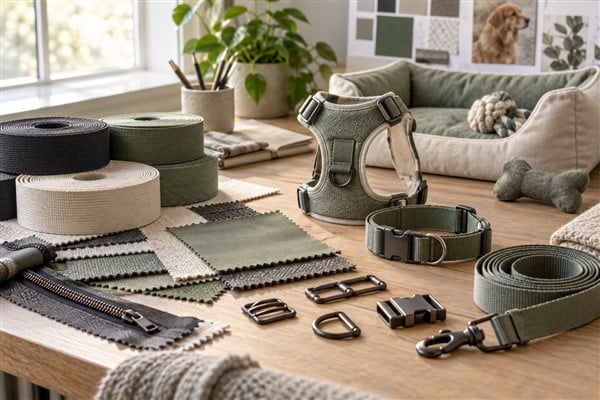
Review planning a pet gift-set packaging budget alongside the collection materials. Packaging can introduce contact, compression, or display conditions that are absent in loose samples. Approve the final arrangement using actual products, especially where light and dark surfaces touch.
How do you control shared stock and changes?
Use the sample development process to approve the matrix and its product-specific exceptions. ISO 10007 configuration-management guidance provides a useful reference for tracking the effect of a material change across drawings, bills of materials, instructions, and samples.
Review manufacturing capabilities for incoming checks, lot identification, allocation, and segregation. If a shared material becomes unavailable, identify every affected product before approving an alternative. One urgent order should not silently redefine the rest of the collection.
For fixed sets, consult GS1 predefined-assortment guidance when changes affect the included trade items. Coordinate product identification with the actual assortment and trading partner requirements rather than assuming the collection name resolves it.
Plan reorder quantities against consumption and lead time. Keep the bottleneck visible: one shared trim can constrain several products at once. Record ownership of unused stock and review the risks before committing to a large common-material purchase.
Frequently Asked Questions
Should every item use exactly the same fabric?
No. Coordinate appearance where useful, but choose construction according to the function and performance of each product.
Can one approval cover an entire collection?
Only where its scope is explicitly defined. Record shared evidence and the additional checks needed for each assembly.
To plan a coordinated collection, contact FungoMate with your product list, desired appearance, quantities, material priorities, and the functions each item must preserve.