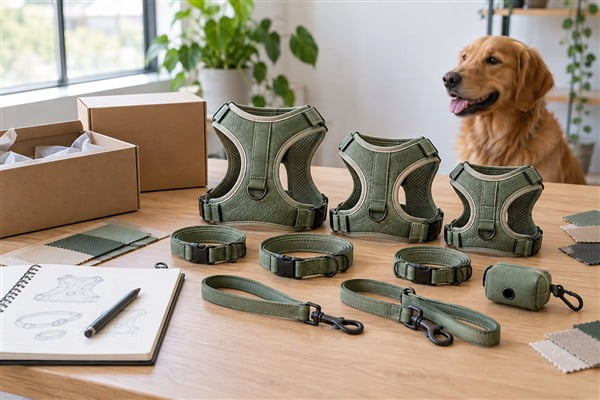

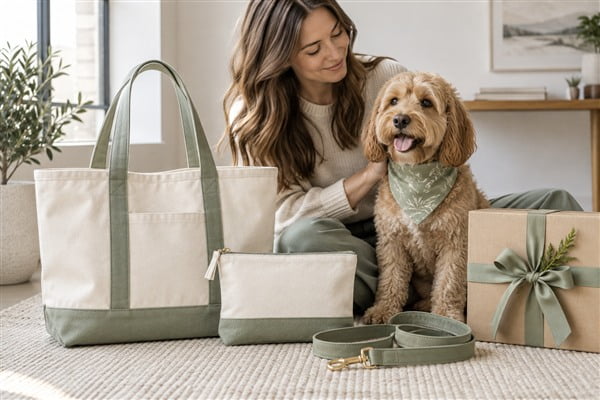
An owner-and-dog gift set should feel coordinated without forcing two unrelated products into the same box. The human item and pet item have different fit, care, and use requirements. Brands building pet sets and bundles need a shared customer occasion and a clear role for every component.
Choose complementary tasks first, then coordinate materials and presentation. Approve each component for its own use and review the complete set for sizing, care communication, packaging, and cost.
What customer occasion should the set serve?
Define who gives the set, who receives it, and how it will be used. A walking-themed collection might pair a useful owner pouch with a dog accessory. A travel gift may need a different combination. Avoid adding an item solely because its color matches.
Write a short role statement for each product. If two pieces perform the same task without adding value, reconsider the combination. Use preparing a complete supplier brief to record the intended occasion, target price, and essential contents.
Keep human and animal uses distinct. A pet bandana should not be treated as a human garment simply because it resembles a scarf. Each item needs appropriate dimensions, labeling, and applicable requirements for its intended market.

How can the products look coordinated without becoming identical?
Choose a shared palette, motif, or material accent rather than demanding the same construction everywhere. A tote may need a different fabric weight from a dog bandana. Coordinate the appearance while preserving each item’s function.
Compare actual material samples under consistent viewing conditions. Approve visible variation across substrates instead of promising an exact match based on a screen image. Keep print placement appropriate to the area that remains visible in use.
For fitted pet items, collect relevant measurements using AKC measuring guide as background. Include a practical size-selection process. A set marketed as a gift still needs a way to avoid sending an unsuitable size to the recipient.
What should sampling cover?
Review every component separately, then assemble the full set. Check whether the owner’s item can carry the intended contents and whether pet accessories fit and function as described. Do not let an attractive presentation conceal a weak individual product.
Use the sample development process to compare handling, care, and repeated use. Where laundering is relevant, discuss ISO 6330 washing and drying procedures and color transfer through ISO 105-C06 laundering colorfastness method. Test the actual material and print versions proposed for the order.
Clarify care differences using ISO 3758 care-label symbols where applicable. Separate instructions may be needed if the human item and pet item cannot be cleaned together. A single set-level label should not imply a care method unsuitable for one component.

How should packaging explain the set?
Make the contents, intended users, sizes, and any exclusions easy to understand. Show which item belongs to the owner and which belongs to the dog. Avoid photographs that suggest additional products are included when they are only props.
Protect components from rubbing or tangling during shipment. Compare a shared insert with simpler individual protection. When comparing bundle quotation costs, separate presentation costs from functional protection so the brand can make deliberate tradeoffs.
Review environmental statements through FTC Green Guides summary and disposal-label examples through How2Recycle label examples. Describe the actual packaging materials and local disposal assumptions rather than calling the whole set sustainable without defined support.
What should the assortment and quotation include?
Decide which products vary by size or color and which remain common. A shared owner pouch can simplify inventory while pet sizes vary, but the packing process must still distinguish the combinations accurately.
Use GS1 predefined-assortment guidance when discussing identification of fixed combinations, and GS1 barcode implementation steps for retail implementation. Confirm the trading partner’s requirements before creating labels for individual components and the complete gift set.
Review available customization options against the supplier’s manufacturing capabilities. Ask whether all items are made in-house or coordinated with approved component suppliers, and define who checks the completed set before shipment.
Agree how exchanges and missing components will be handled. A recipient may need a different pet size while keeping the owner item, so the service process should not require an unnecessary complete-set replacement.
Frequently Asked Questions
Must every item use the same fabric?
No. A consistent visual relationship can be achieved with different materials. Function, care, and durability should remain appropriate to each product.
Should the first launch contain many combinations?
Keep the initial range manageable. Each additional size, color, or item option creates another combination to identify, pack, and replenish. Expand when customer information supports the added complexity.
Build the brief around the recipient
Send the gift occasion, target price, component roles, sizing plan, and packaging concept. Then contact FungoMate to discuss a coordinated collection that offers a useful experience for both owner and dog without sacrificing the individual products’ requirements.