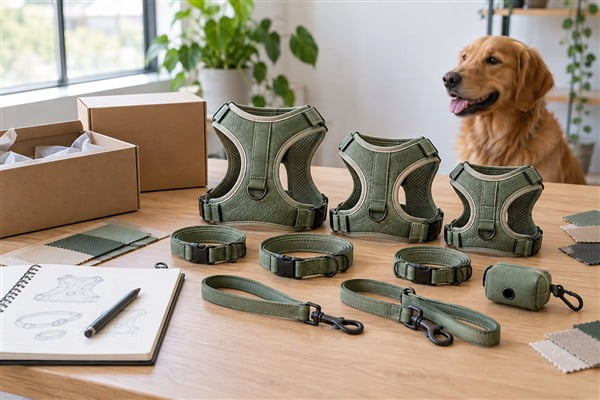


A hotel pet welcome kit has to work for guests and for the staff who store, issue, clean, and replenish it. A photogenic basket can become expensive if items disappear, require slow cleaning, or do not suit the animals admitted by the property. Hospitality buyers sourcing pet sets and bundles should begin with the operating routine.
Separate guest take-home items from reusable hotel assets. Specify the pet policy, issue method, cleaning process, replacement rules, and cost per stay before choosing the final kit contents.
Which guest and property needs should define the kit?
State the animals and approximate size range accepted by the property, the typical stay, and whether the kit is complimentary, rented, or sold. Identify the places where it will be used, such as guest rooms, arrival areas, or outdoor walking routes.
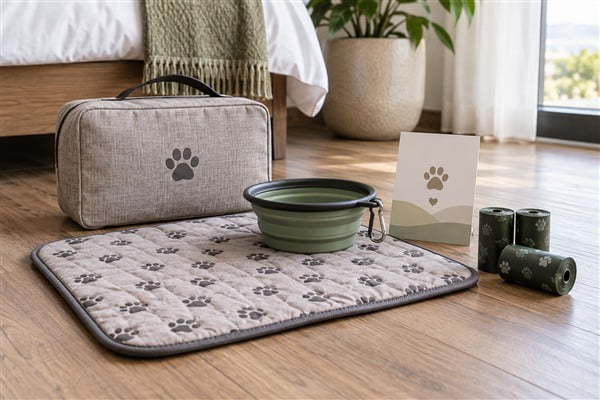
Choose contents around those tasks. A washable mat, suitable bowl, waste bags, and practical information may be more useful than several decorative accessories. If fitted products are included, provide a size-selection process rather than assuming one size suits every guest.
Use preparing a complete supplier brief to document the complete arrangement. Include storage space and staff handling, not just the guest-facing presentation. A kit that requires many separate retrieval steps can be difficult to maintain during busy arrivals.
Which items should be reusable or take-home?
Classify every component. Reusable items need cleaning, inspection, storage, and replacement instructions. Take-home items need a replenishment plan and clear cost ownership. Make that distinction visible to guests so reusable bowls or mats are not mistaken for gifts.
For washable textiles, discuss an applicable procedure using ISO 6330 washing and drying procedures and align care communication with ISO 3758 care-label symbols where relevant. Test the actual proposed process, including drying. A gentle household-care recommendation may not match a hotel’s laundry routine.
If treats are supplied, retain their appropriate packaging and handling information. FDA pet-food handling guidance provides useful food-handling context. Confirm responsibility for food sourcing and guest suitability separately from the textile kit; avoid casual repacking into unmarked containers.
What should the sample review include?
Run a short operational trial with housekeeping, reception, and the purchasing team. Check issuing, carrying, room placement, collection, cleaning, and repacking. Record the time and difficulties observed without turning a small trial into an unsupported performance claim.
Evaluate whether mats dry within the intended turnover process, bowls store without damage, and bags dispense easily. Include repeated cleaning and inspection in the sample development process, with criteria for retiring worn items.
Ask staff to review instruction clarity. Separate a guest welcome card from the internal cleaning checklist. Plan languages and branding through customization options without printing information so small that it is difficult to use.
How should replenishment and identification work?
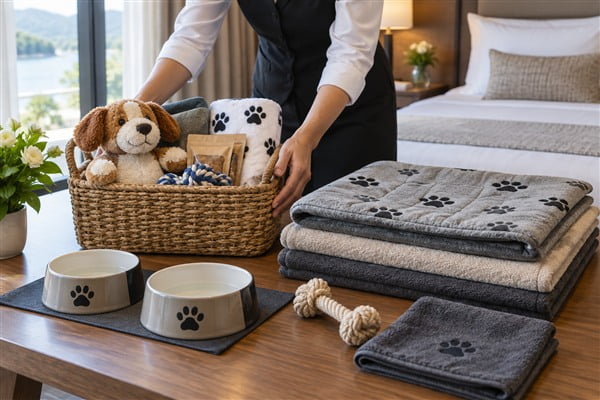
Assign references to individual items as well as the complete kit. A hotel may need more waste bags or replacement mats without reordering the entire presentation. Agree carton quantities, lead times, and acceptable substitutions.
Use GS1 US packaging-level guidance and GS1 barcode implementation steps where the hotel’s procurement or distributor system requires GS1 identification. Keep the receiving description consistent with the purchase order, especially when several properties use slightly different versions.
For group-wide programs, distinguish the common specification from property-specific artwork or contents. Confirm that the supplier’s manufacturing capabilities can support repeat orders and controlled variation. Shared components can simplify stock while allowing a limited local presentation.
How should buyers compare total costs?
Apply comparing bundle quotation costs to separate products, assembly, packaging, delivery, and replacement stock. Also consider cleaning labor, expected reuse policy, and losses. Ask for alternative presentations if an expensive box adds little value to the guest experience.
Clarify delivery responsibilities with ICC Incoterms guidance. Use ISTA test-procedure overview to discuss suitable shipping checks for the packed order, especially where breakable bowls are included. A beautiful kit is not useful if its components arrive damaged.
Review environmental wording using FTC Green Guides summary when making sustainability claims. Describe the actual material or reuse arrangement accurately rather than calling the entire kit eco-friendly without defined support.
Frequently Asked Questions
Should the hotel include a collar or harness?
Only if it can manage sizing, fit instructions, and the intended use. A non-fitted accessory may be simpler when guest animals vary widely and staff cannot provide a fitting service.
Is one kit enough for every property?
A common base can work, but storage, laundry, climate, and guest policies may differ. Keep approved variations explicit so local changes do not become uncontrolled substitutions.
Send an operational sourcing brief
Provide the pet policy, intended contents, take-home and reusable classifications, cleaning process, annual estimate, and delivery locations. Then contact FungoMate to discuss a welcome kit that fits the property’s service routine as well as its brand presentation.