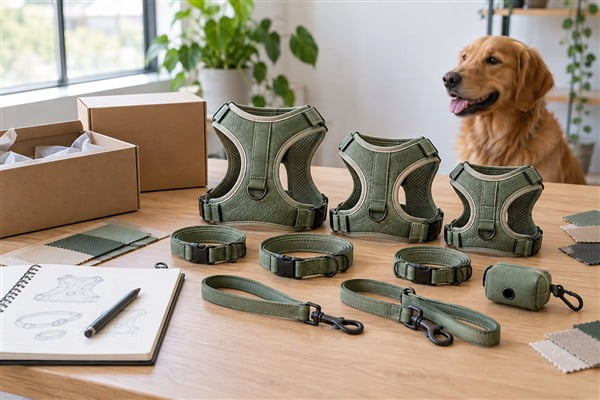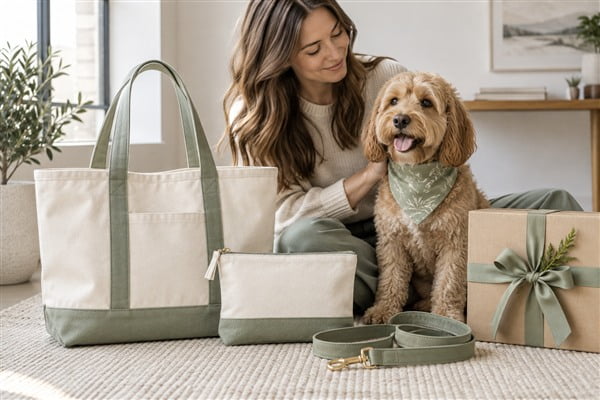
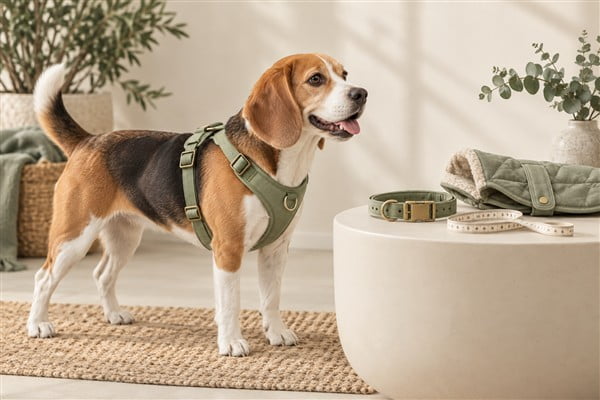
A coordinated pet set can look right and still fit badly. The harness may sit correctly while the collar reaches its adjustment limit or the jacket pulls across the chest. For buyers developing matching pet sets, one “Medium” label cannot replace component-level sizing.
Use the set-size label as a shopping shortcut. Define each product’s measurements and adjustment range, approve the combination, and validate it on the intended body profiles before production.
Why does one size label fail?
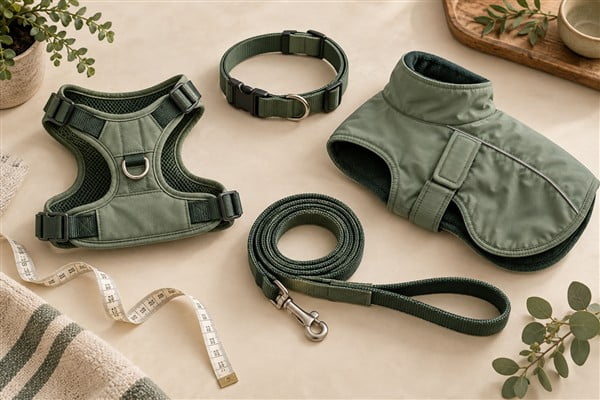
A collar fits the neck. A harness must accommodate the chest, neck opening, and strap position. A jacket also needs suitable back length and movement room. These dimensions do not increase in identical proportions across dogs.
The AKC guide to measuring clothes and gear separates the measurements needed for different products. Use actual dimensions as the primary reference; breed and weight examples provide context but cannot establish fit on their own.
Our approach to building bundles around a clear customer need applies here: every item should perform its job. A “Set B” may intentionally contain a medium harness and small collar. Clear, validated pairing matters more than identical letters on every label.
What should each component specification include?
For harnesses and walking gear, document usable fit rather than relying on a single overall length. Keep the following information in the specification:
- Collar: intended neck range, usable adjustment, width, and closure.
- Harness: chest range, neck-opening requirements, adjustment, and strap position.
- Garment: back length, chest and neck dimensions, stretch, and intended ease.
- Leash: length, width, connector, and intended use.
- Pouch: mounting method, clip clearance, and attachment compatibility.
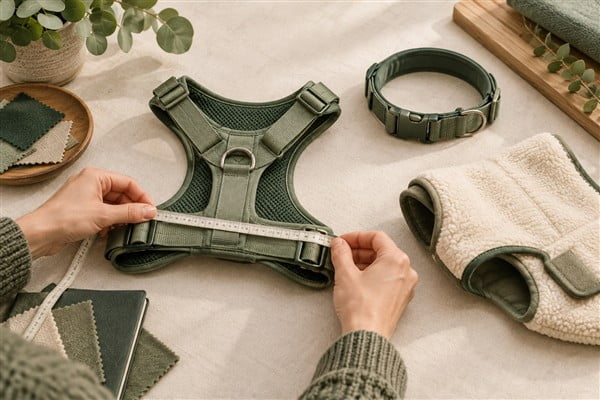
Distinguish body measurements from finished-product dimensions. A jacket’s flat chest width is not a dog’s chest circumference. Hurtta’s measuring guide illustrates measurement guidance and product-specific charts; use your own design’s method and allowances rather than copying a universal sizing rule.
Instructions must match the hardware. Ruffwear’s Front Range adjustment guide is an example of explaining separate adjustments. Write equivalent instructions for your actual straps and closures, then verify that an unfamiliar user can follow them.
How do you build a reliable set-size matrix?
Map each customer-facing set size to exact component SKUs. Record the intended neck, chest, and back measurements alongside each pairing. Overlapping chest ranges alone do not prove that the complete set fits.
For example, a dog with a suitable harness chest measurement may still have an unsuitable neck opening or garment back length. Check every required condition. If one component fails, revise the pairing, adjust the design and retest, allow independent component selection, or remove that wearable from the bundle.
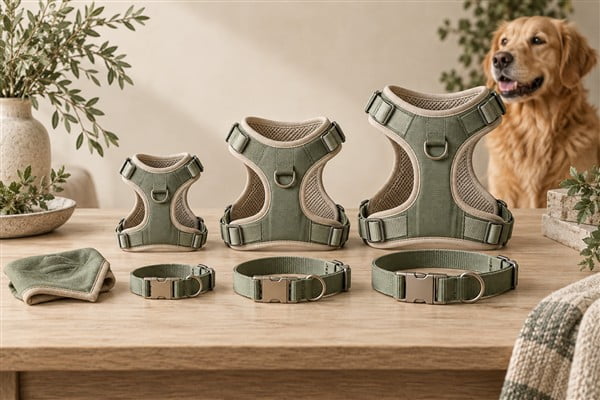
The choice between fixed bundles and mix-and-match sets should follow those findings. Controlled selection is useful when fixed pairings exclude important body profiles; unlimited options are unnecessary if a small approved range solves the problem.
Keep the matrix practical for production. Include component codes, approved sample revisions, measurement methods, and the selected adjustment positions. Have the packing team assemble trial orders from it. A matrix that only the designer understands will not reliably prevent fulfillment mistakes.
What should the fitting trial check?
Observe the sample while the dog stands, walks, sits, and turns under appropriate supervision. Stop if discomfort appears. The AKC discussion of harness fit provides context for checking strap position and unrestricted movement. Record contact near the elbows, neck clearance, and whether adjustments remain stable.
Test the intended wearing arrangement. A garment over a harness can fit differently from either item alone. The AKC guide to choosing a winter coat discusses coat selection; check actual access to attachment points and clearance in your own combination.
Include representative body shapes and size boundaries in the development and sample review process. Record measurements, component sizes, sample revision, observations, and the approval decision. Successful fittings support that configuration, not a claim that every dog of a named breed will fit.
How should labels and orders explain sizing?
Use the approved matrix consistently across product pages, pack labels, purchase orders, and packing instructions. Show how to measure, what each component fits, and what customers should do when their measurements fall outside a pairing.
Shopify’s variant guidance explains option combinations. For configurable sets, WooCommerce Composite Products provides another implementation reference. Whatever system you use, confirm that the order records the selected component variants and deducts the corresponding stock.
Review identification when changing fixed contents using GS1’s predefined-assortment rule. Also repeat relevant checks when customized materials and trims affect thickness, stretch, or adjustment. An unchanged size name does not establish an unchanged usable fit.
Frequently Asked Questions
Can one set contain different component sizes?
Yes, if the combination is intentional, validated, and clearly explained. The outer label should identify the approved pairing rather than force every product into the same letter size.
Should customers always choose the larger size?
No universal rule works across harnesses, collars, and garments. Follow design-specific guidance. If neither available size fits correctly, recommend another configuration instead of a loose harness or restrictive garment.
How can returns improve the range?
Record which component failed and why. Separate neck, chest, back-length, adjustment, and labeling issues so revisions address the actual mismatch.
Contact FungoMate with your component list, intended customer profiles, and target size range to develop a coordinated set supported by clear measurements and validated pairings.