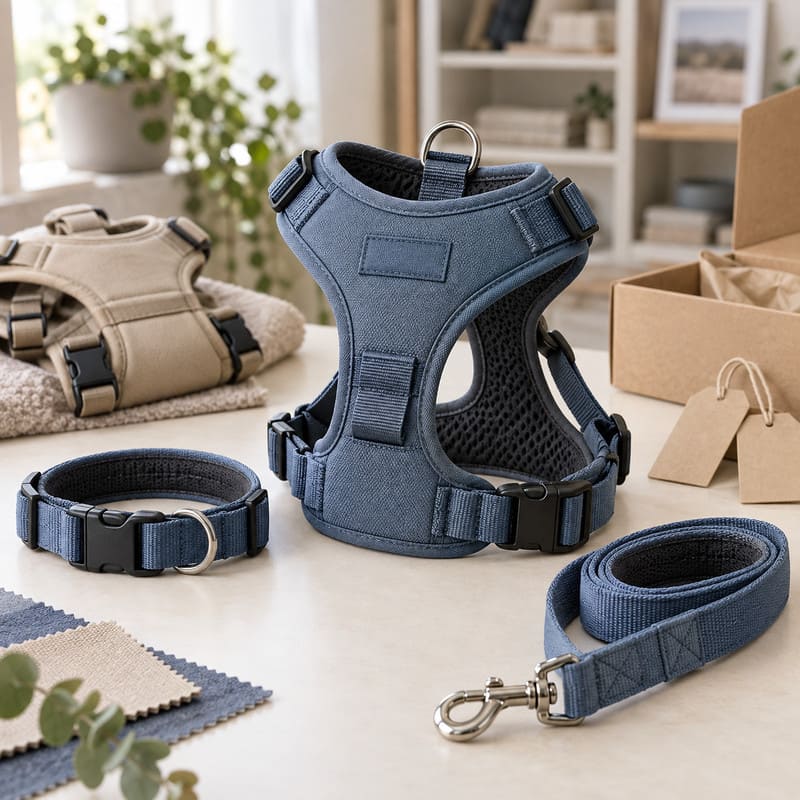
Private Label Dog Harnesses can blow up budget and timelines if customization runs ahead of reality. You want real brand differentiation, but you also need sane MOQs, channel compliance, and fit that works across sizes. I use a tiered framework to pick the minimum viable changes that protect cost, lead time, and IP.
Choose a customization tier based on three variables: budget/MOQ elasticity, channel compliance and launch timing, and target dog/use‑case. Start with Tier 1–2 for fast, low‑risk differentiation. Move to Tier 3–4 only after demand validates the investment. This keeps Private Label Dog Harnesses on schedule and within scope.
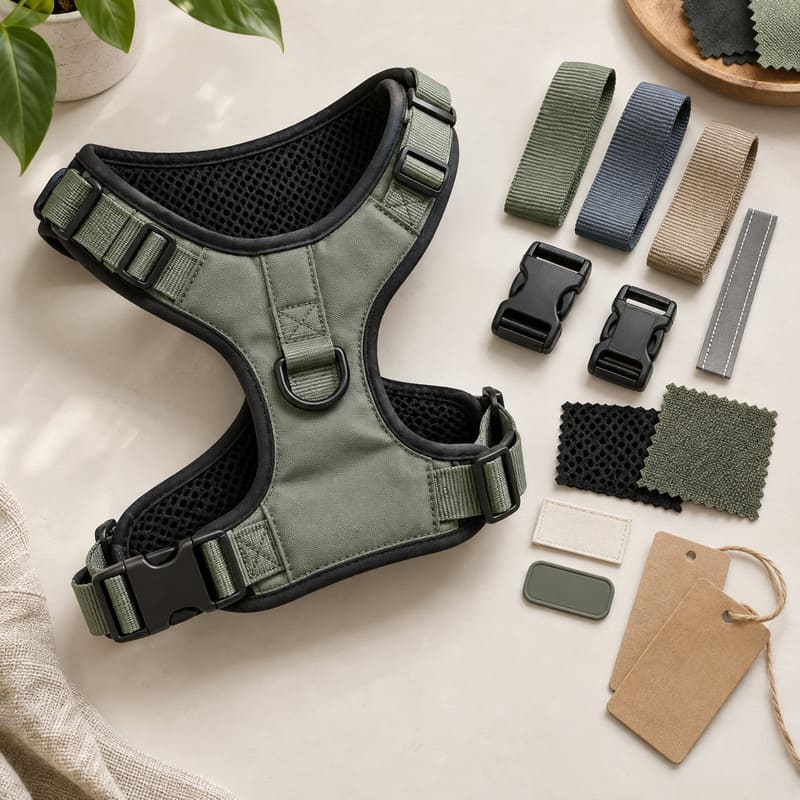
That quick answer hides a lot of trade‑offs. Below, I show how I map real projects to tiers, avoid scope creep, and set go/no‑go gates that keep Private Label Dog Harnesses moving without nasty surprises.
What tier of Private Label Dog Harnesses fits your budget and MOQ?
You want standout design, but your cash flow and MOQs are tight. The risk is saying yes to custom dyes, bespoke hardware, and structural changes that trigger supplier minimums and delays[^1]. The fix is a ladder: pick Tier 1–2 for speed; reserve Tier 3–4 for validated volumes.
Pick Tier 1–2 when budgets and MOQs are constrained, or when you have a hard deadline (Amazon Q4, retail resets). Use catalog webbings, buckles, and reflective trims to avoid minimums[^2]. Move to Tier 3–4 when volumes justify fit rework, new tooling[^3], or unique control features, with patent clearance “to be verified.”[^4]
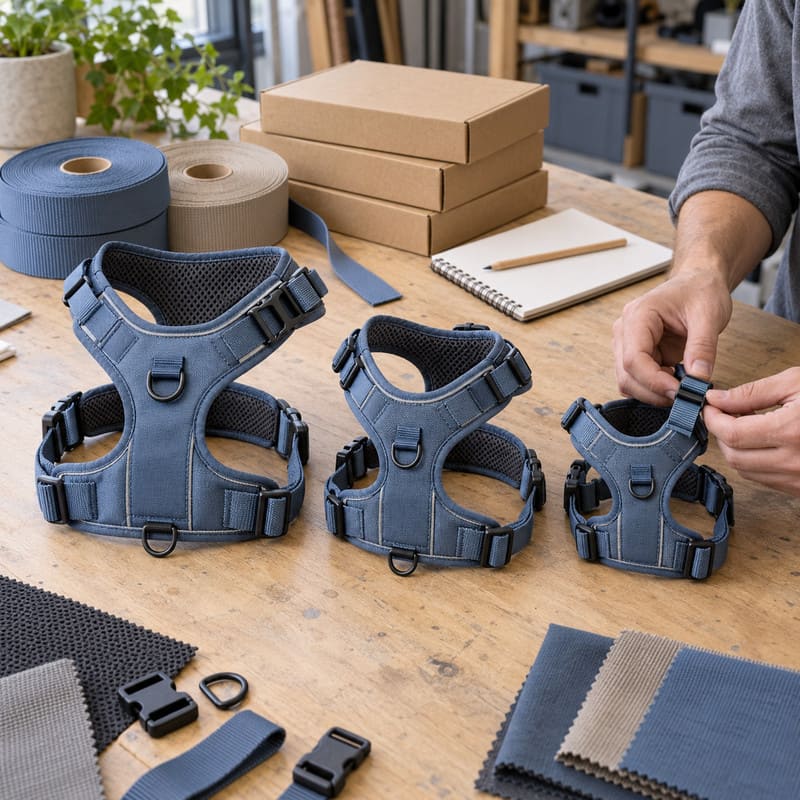
The customization ladder
- Tier 1: Brand marks + colorway on a proven model. Fastest, lowest MOQ movement, minimal IP exposure.
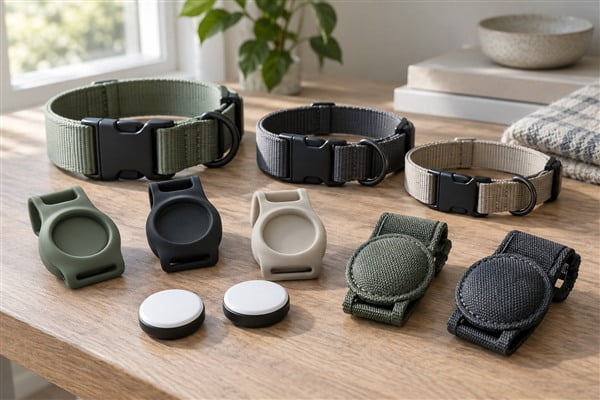
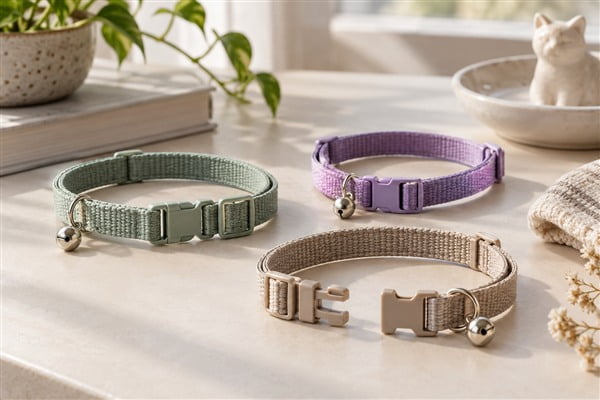
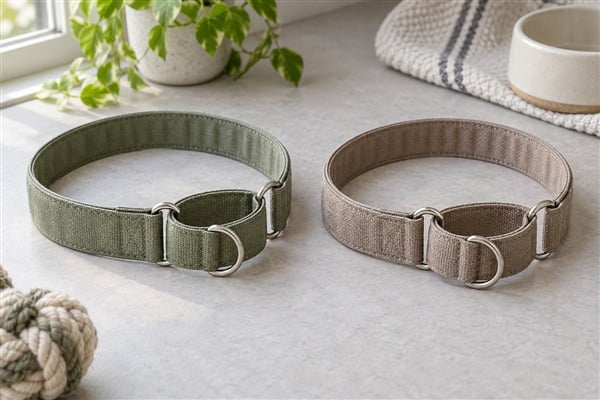
- Tier 2: Catalog‑bounded material/hardware swaps + brand system. Moderate sampling; watch color/finish minimums.
- Tier 3: Fit/pattern adjustments within proven structure. More validation across size run; affects grading and QC[^5].
- Tier 4: Structural redesign/ODM. Highest risk; front‑load patent checks and compliance planning; longer lead times and MOQs.
To see how a brief moves through sampling, approval, and production, review our pet product development process.
Decision triage checklist
- Budget/MOQ elasticity:
- Tight: Tier 1–2. Avoid custom dye lots and bespoke hardware finishes.
- Elastic: Tier 3–4 possible. Plan for minimums on dyes, molds, or unique buckles.
- Channel/compliance:
- Amazon or tight retail window: prioritize labeling, packaging, and test readiness now; defer structure changes.
- Specialty retail: allow longer cycles, but confirm claims (pull control, load rating) with “to be verified” lab plans[^6].
- Target dog/use‑case:
- Daily walking for small breeds: Tier 1–2 often sufficient.
- Training/anti‑pull/outdoor loads: Tier 3 geometry work usually required[^7]. Color + logo is not enough.
Quick tier map
| Tier | Scope | Typical use | Risk/impact |
|---|---|---|---|
| 1 | Logo, labels, packaging, stock colors | Fast launch | Lowest cost/MOQ, low IP exposure |
| 2 | Catalog webbing/buckles, reflective, stitching accents | Mid differentiation | Moderate sampling, watch minimums |
| 3 | Strap lengths, girth geometry, size grading | Functional claims | Fit validation, more QC complexity |
| 4 | Panel architecture, load paths, control features | Hero product | Patent clearance, tooling, longest lead |
Case snapshot (anonymized)
A US Amazon brand wanted anti‑pull claims by Q4 with low MOQs. We chose Tier 2: catalog reflective webbing, upgraded buckles, branded packaging. One sampling round, reference size fit check, then a graded review. Launch happened on time. After reviews and reorders, we moved to Tier 3 to refine chest geometry.
Go/no‑go gates I set
Align these gates with the supplier's manufacturing and quality-control capabilities.
- Fit acceptance criteria on a reference size, then spot checks across size run.
- Material availability windows from approved catalogs; escalate only when demand justifies minimums.
- Packaging and labeling readiness for channel rules; certifications marked “to be verified” until lab reports land.
I run this ladder on every Private Label Dog Harnesses project at FungoMate in Ningbo. It keeps OEM/ODM programs predictable for US/EU/JP/KR buyers without killing differentiation.
When you are ready to prepare a private-label project brief, include your target market, quantities by size and color, customization priorities, and launch timing.
Frequently Asked Questions
Do Private Label Dog Harnesses need testing for Amazon or retail?
Yes. Expect labeling, packaging, and claims to be checked[^8]. Pull strength, material safety, and reflective performance may apply[^9] but are “to be verified” per your channel. I help scope test plans and gather documents, but final certification should be confirmed with qualified labs[^10].
Can I get low MOQs with custom‑dyed webbing and bespoke hardware?
Usually no. Custom dyes, finishes, or new molds trigger supplier minimums and longer buys. Start catalog‑first to keep MOQs manageable. Scale to custom materials once sales volume justifies the minimums and added lead time.
When should I change harness geometry?
Change geometry when your functional claim changes—anti‑pull training, load‑bearing outdoor use, or special breeds. That’s Tier 3 territory and needs fit validation across sizes. Do not mirror competitor structures or patented features.
Conclusion
The smart play with Private Label Dog Harnesses is tiered customization: start at Tier 1–2 to launch fast and safe, then invest in Tier 3–4 when demand proves out. If you want a catalog‑first shortlist, fit criteria, and a clean validation path, contact FungoMate for OEM/ODM scoping and sampling. We’ll keep you on schedule and within scope.
[^1]: "Causes and remedies of batch to batch shade variation in dyeing ...", https://www.academia.edu/29057297/Causes_and_remedies_of_batch_to_batch_shade_variation_in_dyeing_textilefloor. Textile engineering curricula (e.g., NC State’s Wilson College of Textiles) describe how batch dyeing is constrained by machine capacity and liquor ratios, creating minimum lot sizes, while manufacturing process references note that fabricating new tooling for hardware introduces additional setup lead time before production can start; together these factors support that customization often triggers supplier MOQs and delays. Evidence role: general_support; source type: education. Supports: That batch dyeing processes impose minimum lot sizes and that new hardware/tooling introduces additional lead time, thereby increasing MOQs and timelines for customized components.. Scope note: Specific MOQ thresholds and delays vary by supplier, process, and material, and are not specific to dog harnesses. [^2]: "Commercial off-the-shelf", https://en.wikipedia.org/wiki/Commercial_off-the-shelf. Encyclopedic overviews of commercial off‑the‑shelf (COTS) components note that standard, in‑stock parts typically shorten procurement and development timelines relative to custom designs, supporting the claim that catalog materials can mitigate MOQ and lead‑time pressures. Evidence role: general_support; source type: encyclopedia. Supports: That using commercial off‑the‑shelf components generally reduces development time and procurement hurdles versus custom parts.. Scope note: General COTS advantages are context‑dependent and not specific to textile hardware suppliers’ exact MOQs. [^3]: "Economies of scale", https://en.wikipedia.org/wiki/Economies_of_scale. Reference articles on injection moulding explain that tooling entails substantial upfront cost and setup, which are amortized over production volume; this supports the guidance that new tooling is typically justified only once demand forecasts warrant it. Evidence role: general_support; source type: encyclopedia. Supports: That injection molding and similar processes involve high upfront tooling costs and setup time, making new tooling more economical at larger production volumes.. Scope note: These references primarily address plastic components and general manufacturing economics; specific tooling types and costs for pet hardware can differ. [^4]: "Tool 5 Freedom to Operate", https://www.wipo.int/documents/d/tisc/docs-en-tisc-toolkit-freedom-to-operate-description.pdf. The World Intellectual Property Organization (WIPO) describes freedom‑to‑operate assessments as a standard practice to evaluate potential patent infringement risks prior to market entry, supporting the need to verify patent clearance when adding novel structural features. Evidence role: expertconsensus; source type: institution. Supports: That conducting a freedom‑to‑operate analysis is a recognized step to assess patent risks before commercializing a redesigned product.. Scope note: FTO guidance is general and does not determine the status of any specific dog harness design. [^5]: "Pattern (sewing)", https://en.wikipedia.org/wiki/Pattern(sewing). Encyclopedic descriptions of pattern grading explain that changes to a base pattern must be translated systematically across sizes, which increases the scope of fit verification and related quality checks. Evidence role: general_support; source type: encyclopedia. Supports: That modifying a base pattern necessitates grading adjustments across sizes, which introduces additional verification and QC needs.. Scope note: Most grading references focus on human apparel; pet harness sizing is analogous but not identical. [^6]: "FTC Policy Statement Regarding Advertising Substantiation", https://www.ftc.gov/legal-library/browse/ftc-policy-statement-regarding-advertising-substantiation. The U.S. Federal Trade Commission’s Advertising Substantiation Policy states that objective claims require a reasonable basis supported by competent and reliable evidence, supporting the practice of planning lab tests to confirm performance claims before finalizing them. Evidence role: definition; source type: government. Supports: That in the United States, objective product performance claims must be truthful and substantiated with competent and reliable evidence.. Scope note: This guidance is U.S.‑specific and does not dictate particular test methods for dog harnesses. [^7]: "Effects of restrictive and non-restrictive harnesses on ...", https://pubmed.ncbi.nlm.nih.gov/30455191/. Peer‑reviewed studies (e.g., Lafuente et al., 2018, in The Veterinary Journal) report that different harness designs can alter shoulder extension and gait in dogs, supporting the premise that geometry affects functional outcomes and may need adjustment for anti‑pull or load‑bearing aims. Evidence role: mechanism; source type: paper. Supports: That harness design and strap placement influence canine movement/biomechanics, implying geometry changes affect function.. Scope note: Study conditions and sample sizes are limited, and results are not a design prescription for all harness types. [^8]: "Safety, compliance, and product restrictions", https://sellercentral.amazon.com/help/hub/reference/external/GXMGGPL6LC4CVXHT?locale=en-US. Amazon’s seller compliance policies state that products must meet applicable safety, labeling, and certification requirements and that Amazon may request documentation to verify compliance and claims, supporting the expectation of checks for labeling, packaging, and claims. Evidence role: definition; source type: other. Supports: That Amazon requires sellers to comply with applicable product safety, labeling, and certification rules and may request documentation to substantiate compliance and claims.. Scope note: Specific documentation requirements vary by marketplace, category, and over time. [^9]: "ANSI/ISEA 107 standard", https://wwwn.cdc.gov/PPEInfo/Standards/Info/ANSI/ISEA1072020. ASTM International publishes ASTM D6775, a standard test method for breaking strength and elongation of textile webbing, tapes, and braided materials, indicating that established methods exist to substantiate pull‑strength aspects of harness materials. Evidence role: mechanism; source type: institution. Supports: That recognized test methods exist to evaluate properties like tensile strength of webbing materials relevant to pull‑strength claims.. Scope note: ASTM D6775 evaluates materials rather than complete harness assemblies and is voluntary unless specified by a buyer or regulator. [^10]: "Key Facts: ISO Accreditation", http://www.fsis.usda.gov/science-data/laboratories-procedures/accredited-laboratory-program/key-facts-iso-accreditation. ISO/IEC 17025 specifies general requirements for the competence of testing and calibration laboratories, supporting the recommendation to rely on qualified (ideally accredited) labs for final certifications. Evidence role: definition; source type: institution. Supports: That ISO/IEC 17025 defines competence requirements for testing and calibration laboratories, providing a basis for identifying qualified labs.. Scope note: ISO/IEC 17025 does not mandate accreditation for pet harness testing; it defines competence criteria applicable across laboratory domains.