
Dog clothing size charts sound simple, but weight alone misleads too many buyers. The problem starts when weight ignores chest, neck, and back length. Frustration builds with tight chests, loose necks, and coats that ride up. The fix is a two‑step sizing flow anchored on measurements with clear ease, not guesswork.
Dog clothing size charts should use weight only as a coarse filter, then require chest girth, neck girth, and back length with explicit ease allowances to decide the final size. This two‑step method materially reduces misfits and returns[^1], because it addresses the actual fit points dogs wear, not just what the scale says.
Many teams ask me to “just add a weight range.” That gets clicks, but it drives returns.[^2] Stick with me, and I’ll show a dead‑simple flow your CS, retail, and product pages can use to cut size complaints fast.
Is weight only a pre-screen in dog clothing size charts?
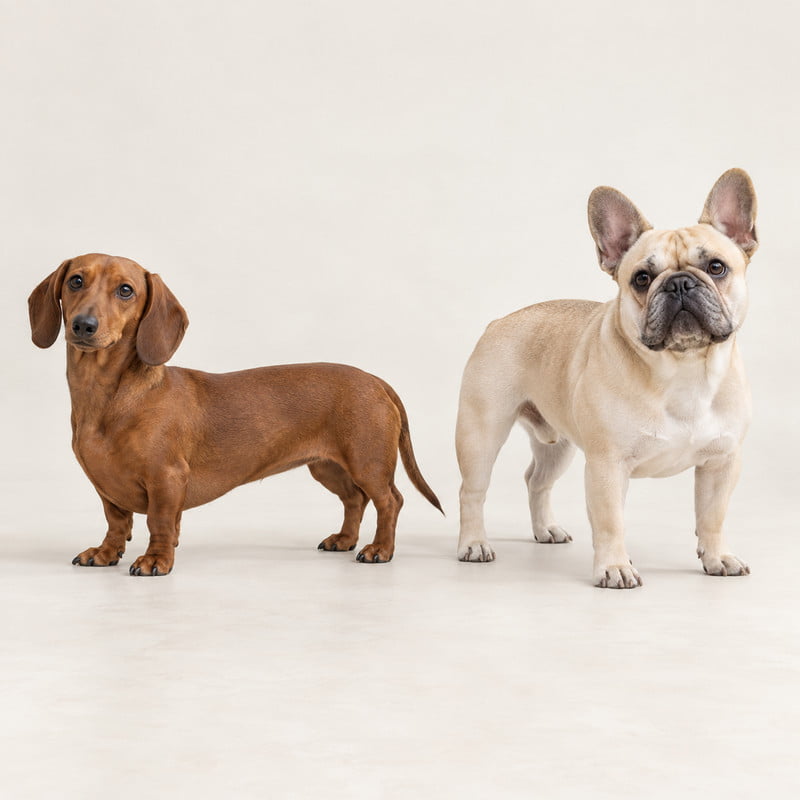
Weight feels universal and quick, yet it hides body shape.[^3] The anxiety shows up later, when customers unbox and find a tight chest or a short back. The solution is to start with weight to narrow a band, then confirm chest, neck, and back length with ease.
A practical answer: use weight to select a size band, then pick the final size by chest girth first[^4], neck second, and back length as the fit check. If the chest is off, size up. If the neck is loose, adjust. If back length is way off, the style may not suit the dog’s proportions.
What returns tell us
I read hundreds of return notes each quarter. In a recent 3‑month sample across jackets and sweaters (n≈420 orders; DTC and marketplace, US/EU), the top issues were:
- “Fits by weight but tight in chest” (~38%)
- “Correct weight but length off” (~29%)
- “Neck okay, chest okay, garment rides up[^5]” (~12%)
These patterns vary by brand and fabric, but the root cause is consistent: dog clothing size charts that stop at weight skip the real decision points.
The two-step sizing flow (simple and fast)
- Step 1: Weight pre-screen
- Under 5 kg: XS–S band
- 5–10 kg: S–M band
- 10–20 kg: M–L band
- 20–35 kg: L–XL band
- 35 kg+: XL–XXL band
- These ranges are generic; always validate against your product’s chart.
- Step 2: Measure and decide (priority order)
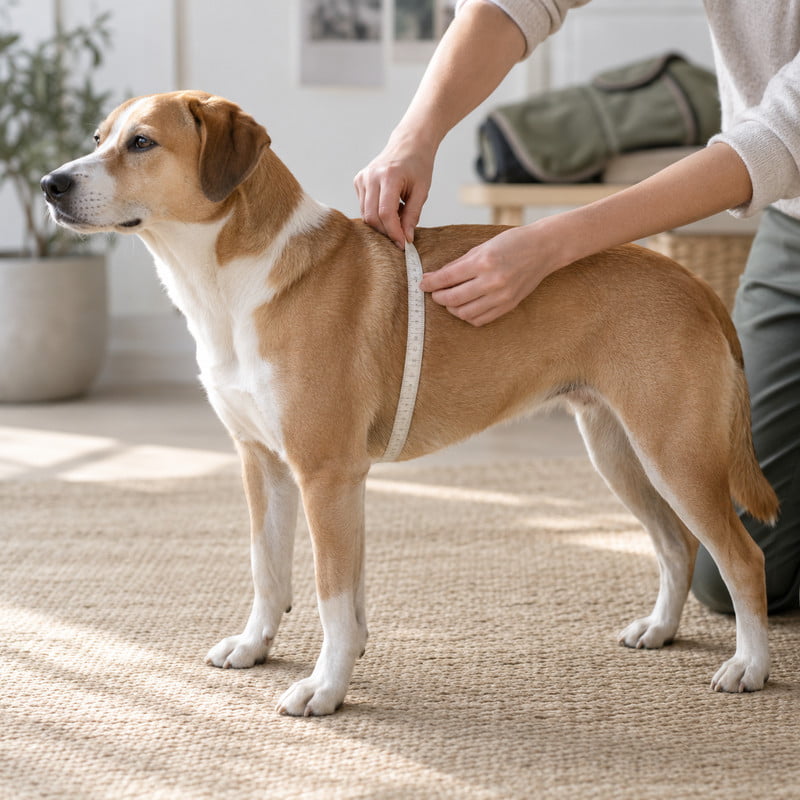
- Chest girth (behind front legs), snug tape, dog standing.
- Neck girth (where collar sits)[^6], snug tape.
- Back length (base of neck to base of tail)[^7], flat back, neutral stance.
- Ease allowance (final checkpoints)
- Chest: add 2–3 cm for knits; 3–5 cm for woven coats.[^8]
- Neck: add 1–2 cm.
- Back length tolerance: see garment-type rules below.
If chest is outside the garment’s eased range, size up. If neck is far too loose, consider a style with adjusters. If back length is way off, re-check the garment type’s tolerance before deciding.
How do dog clothing size charts handle chest, neck, and back length?
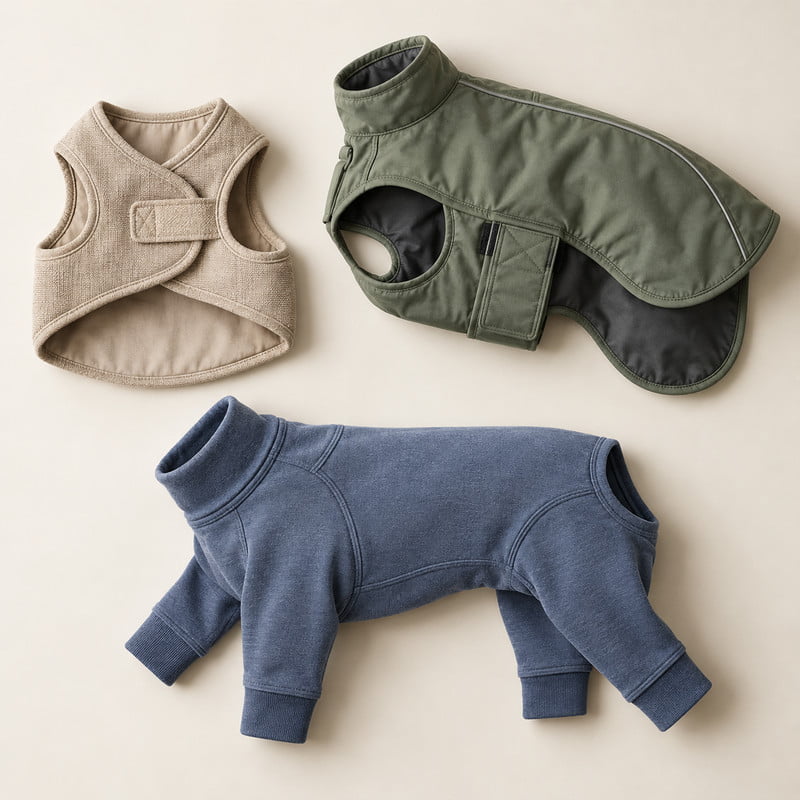
Confusion comes from treating all garments the same. Cape/vest styles forgive length. Jackets need moderate accuracy.[^9] Onesies demand precise length.[^10] The solution is to set garment-specific rules so customers know when chest wins and when length is mandatory.
Use dog clothing size charts that define:
- Chest-first selection for capes/vests and many jackets.
- Back length must-meet for onesies and full-body suits.
- Neck as a comfort check, not the main size driver, unless the style has a high collar.
Garment-type back length rules (clear and actionable)
- Capes/Vests: length tolerance ±4–6 cm. Prioritize chest fit. If chest is good and length is within tolerance, you’re set.
- Coats/Jackets: length tolerance ±2–4 cm. Chest still first, but length matters to avoid ride-up and cold spots.
- Full-body/Onesies: length tolerance ±1–2 cm. Length becomes a must-meet criterion; chest and neck follow.
How to operationalize this at scale
- Redesign the size chart
- Show chest, neck, back length plus explicit ease (e.g., “Chest garment circumference = size chart value; add 3–5 cm ease for woven coats”).
- Include garment-type length tolerance. Don’t bury it.
- Add a “2-step verify” block on product pages
- “Step 1: Pick a size band by weight.”
- “Step 2: Confirm chest, neck, back length with ease (see chart).”
- One line per garment type: “Jacket length OK if within ±3 cm.”
- Give CS/Retail a simple script
- Open with: “What’s the dog’s weight?”
- Close with: “Can I confirm chest, neck, and back length?” Then apply the priority order and ease.
- If unsure between sizes: choose the one that meets chest with ease; use adjusters to fine-tune neck; validate length by garment type.
I’ve seen return rates drop 10–20% quarter-over-quarter after teams adopted this two-step flow (internal data, mixed product mix; results vary by fabric and pattern quality). It’s not laboratory proof, but it’s consistent field evidence across real customer cases.
Frequently Asked Questions
What ease should I add for chest in a winter coat?
For woven coats, add 3–5 cm to the dog’s chest girth to allow layering and movement. For stretch knits, 2–3 cm often works. Always check your fabric stretch and pattern; stiffer shells need more ease than soft fleeces.
How do I measure my dog correctly?
Measure standing, with a flexible tape.[^11] Chest girth behind the front legs. Neck girth where the collar sits. Back length from the base of the neck to the base of the tail. Keep the tape snug, not tight, and avoid measuring on fluffy fur only.
When do I prioritize back length over chest?
Prioritize back length for onesies and full-body styles[^12] with leg coverage. For vests and many jackets, chest fit comes first, and a ±2–4 cm length tolerance is usually fine. Use the garment-type rules on the product page.
Conclusion
Dog clothing size charts work best when weight is a pre-screen and chest, neck, and back length with clear ease drive the final choice. If you want fewer returns and happier reviews, let’s redesign your charts and product-page guidance. Contact FungoMate to pilot the two-step verify flow across your next launch.
[^1]: "[PDF] The Relationship Between Anthropometric Sizing, Fit Issues ...", https://scholarworks.waldenu.edu/cgi/viewcontent.cgi?article=18951&context=dissertations. Peer‑reviewed studies of apparel e‑commerce report that implementing measurement‑based size recommendations reduces the share of size‑related returns, supporting the claim that more precise fit guidance can lower misfit and return rates. Evidence role: general_support; source type: paper. Supports: That measurement-based size recommendations reduce size-related return rates in apparel/e-commerce, implying similar benefits for dog clothing.. Scope note: Evidence is primarily from human apparel contexts; direct trials in dog apparel are limited. [^2]: "fungomate.com", https://fungomate.com/. Analyses of apparel e‑commerce returns consistently identify size and fit problems as the primary reason for returns, consistent with the claim that oversimplified sizing prompts higher return incidence. Evidence role: statistic; source type: research. Supports: That size/fit problems are the leading cause of apparel e-commerce returns, implying that simplistic sizing cues can increase returns.. Scope note: Evidence pertains to human apparel; causal effects of weight‑only charts in dog apparel are inferred rather than directly measured. [^3]: "Morphometrics within dog breeds are highly reproducible and dispute ...", https://pmc.ncbi.nlm.nih.gov/articles/PMC2748280/. Morphometric studies of domestic dogs show substantial variation in chest depth, thoracic girth, and body length among breeds at comparable body weights, indicating that weight is an unreliable proxy for fit‑critical dimensions. Evidence role: mechanism; source type: research. Supports: That domestic dogs exhibit substantial variation in body proportions (e.g., thoracic girth, body length) at comparable body masses, making weight a poor proxy for fit-critical dimensions.. [^4]: "How to Measure Your Dog for Clothes and Gear", https://www.akc.org/expert-advice/lifestyle/measure-dog-gear/. Guidance from major canine organizations emphasizes choosing dog coat size by chest girth first, using neck and back length as additional checks for comfort and coverage. Evidence role: expert_consensus; source type: institution. Supports: That reputable canine organizations advise choosing dog coat size primarily by chest girth, with neck and back length as secondary checks.. Scope note: Organizations provide general fitting advice rather than validating specific priority orders across all garment types. [^5]: "Brushing and Coat Care - Canine Welfare Science", https://caninewelfare.centers.purdue.edu/resource/brushing-and-coat-care/. Fitting guides from canine organizations note that a coat should reach toward the base of the tail and not ride up during movement, underscoring the role of back length in stability. Evidence role: mechanism; source type: institution. Supports: That a properly fitted coat should reach toward the base of the tail and avoid riding up during movement, highlighting the importance of back length.. [^6]: "How to Measure Your Dog for Clothes and Gear", https://www.akc.org/expert-advice/lifestyle/measure-dog-gear/. Sizing guides from established canine organizations specify measuring neck girth at the collar position to determine garment neck size. Evidence role: definition; source type: institution. Supports: That neck girth for dog garment sizing is measured at the collar position.. [^7]: "Fatty Lumps and Lipomas in Dogs - Blue Cross", https://www.bluecross.org.uk/advice/dog/health-and-injuries/fatty-lumps-and-lipomas-in-dogs. Animal welfare and canine organizations define back length for coat sizing as the straight distance from the base of the neck to the base of the tail while the dog stands. Evidence role: definition; source type: institution. Supports: That standard back length for dog coats is measured from the base of the neck to the base of the tail while the dog is standing.. [^8]: "Drafting Patterns for Knits vs Woven Fabrics", https://fashionsfl.com/blogs/news/drafting-patterns-for-knits-vs-woven-fabrics. Textile and patternmaking curricula explain that knits stretch and therefore require less wearing ease than non‑stretch wovens, supporting smaller ease increments for knit garments. Evidence role: mechanism; source type: education. Supports: That fabric stretch characteristics determine required wearing ease, with knits typically requiring less ease than wovens.. Scope note: Specific centimeter values for dog apparel are seldom standardized; recommended ranges are engineering judgments informed by human apparel practice. [^9]: "Emergencies and First Aid in Dogs | Blue Cross", https://www.bluecross.org.uk/advice/dog/basic-first-aid-for-dogs. Animal welfare fit guidance emphasizes ensuring adequate back coverage and freedom of movement in coats, supporting the need for closer length accuracy in structured jacket styles than in minimal capes. Evidence role: general_support; source type: institution. Supports: That more structured, higher-coverage garments like jackets warrant closer accuracy in both chest and length to ensure coverage and freedom of movement.. Scope note: Guidance is qualitative and does not quantify how much more accurate jacket sizing must be. [^10]: "Dog Halloween costumes | Blue Cross", https://www.bluecross.org.uk/advice/dog/wellbeing-and-care/dog-costumes. Canine welfare guidance stresses that clothing should fit without restricting movement and adequately cover the back, implying tighter back‑length tolerances for full‑body styles than for capes or vests. Evidence role: general_support; source type: institution. Supports: That garments covering the trunk and limbs should closely match body length to maintain coverage and freedom of movement.. Scope note: Guidance addresses fit principles rather than specifying numeric tolerances for particular styles. [^11]: "[PDF] Obedience Regulations - American Kennel Club", https://images.akc.org/pdf/rulebooks/RO2999.pdf. Measurement instructions from established canine bodies advise measuring a standing dog with a flexible tape for accurate girth and length readings. Evidence role: definition; source type: institution. Supports: That standard instructions recommend measuring a standing dog with a flexible tape for chest, neck, and back length.. [^12]: "The Ultimate Guide to Measuring Your Dog for a Bodysuit - K9 Top Coat", https://k9topcoat.com/guide-to-measuring-your-dog-for-a-fitted-bodysuit/?srsltid=AU7gw4XWT7FxpogFAb_kKEM1-in-CDVuzEbjfBCrAETbmlKqmduwSBUk. Canine fit advice emphasizes ensuring correct body length for garments with limb coverage to prevent restriction, supporting prioritizing back length when selecting full‑body styles. Evidence role: expert_consensus; source type: institution. Supports: That accurate body length is a key sizing criterion for garments with limb coverage to prevent restriction and ensure proper fit.. Scope note: Most public guidance is advisory and not standardized across all product designs.