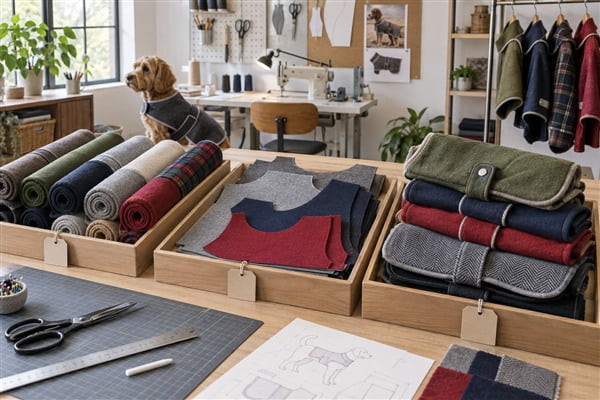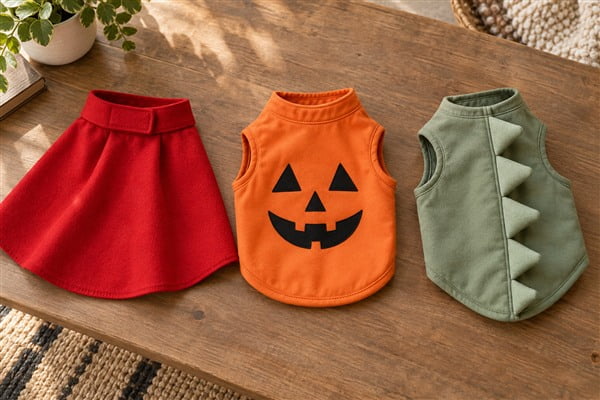
Choosing a pet clothing manufacturer sounds simple until fit turns into returns. Poor grading, vague size labels, and loose tolerances create real cost. The fix is a plan. Ask questions that turn “fit” from a try-on into a controlled process that runs from PP sample to bulk production at scale. Start with the pet apparel range to identify the garment categories your sizing program needs to cover.
To choose a pet clothing manufacturer, ask four things: size scheme and grading rules, the fit testing protocol, how materials/structure change patterns, and how tolerances/QC lock repeatability. Require a size map by dog archetype, a fit report template, material-specific specs, and a PP-to-bulk gate plan.
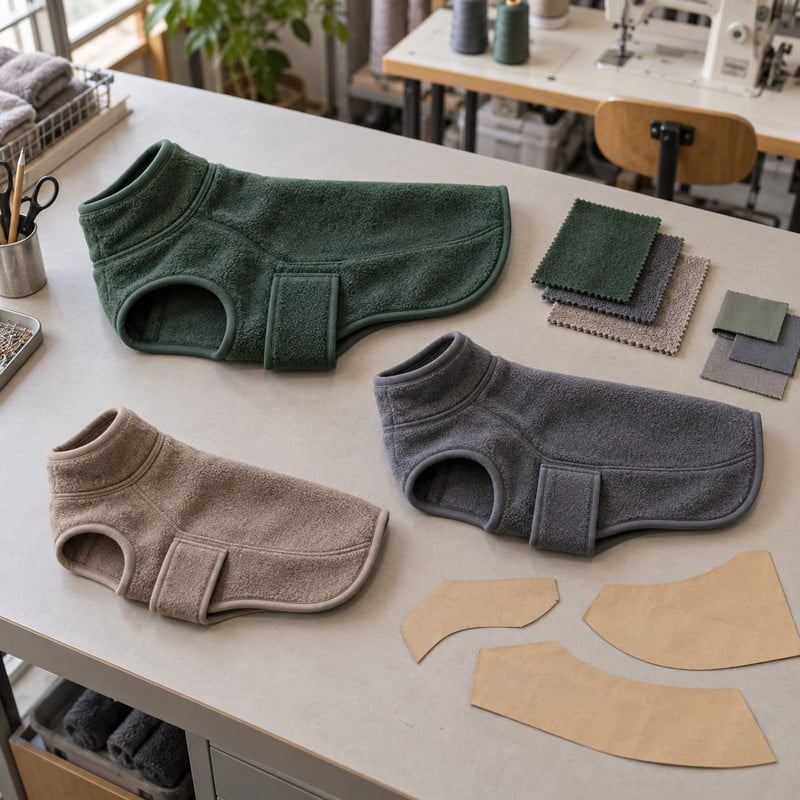
A nice-looking sample can mask shaky grading, unclear ease, or missing checks. I push buyers to define dog-type coverage and measurement tolerances up front. That way, we prevent surprises, not just fix them. For private-label programs, review our OEM/ODM development services to define the scope before requesting samples.
How should you vet a pet clothing manufacturer for size and fit?
Many buyers chase “S/M/L” and photos. That’s risky. Returns spike when deep-chested or long-bodied dogs get ignored.[^1] A better path is a system: size scheme by dog archetype, a fit protocol, material-aware pattern rules, and QC gates that hold in bulk.
The short list: request a draft size map tied to canine archetypes, a written fit protocol with pass/fail criteria, material-specific pattern/assembly notes, and a measurement spec with tolerances, AQL, and PP-to-mass change control. If a pet clothing manufacturer has these, you can scale fit.
Size scheme and dog-type coverage
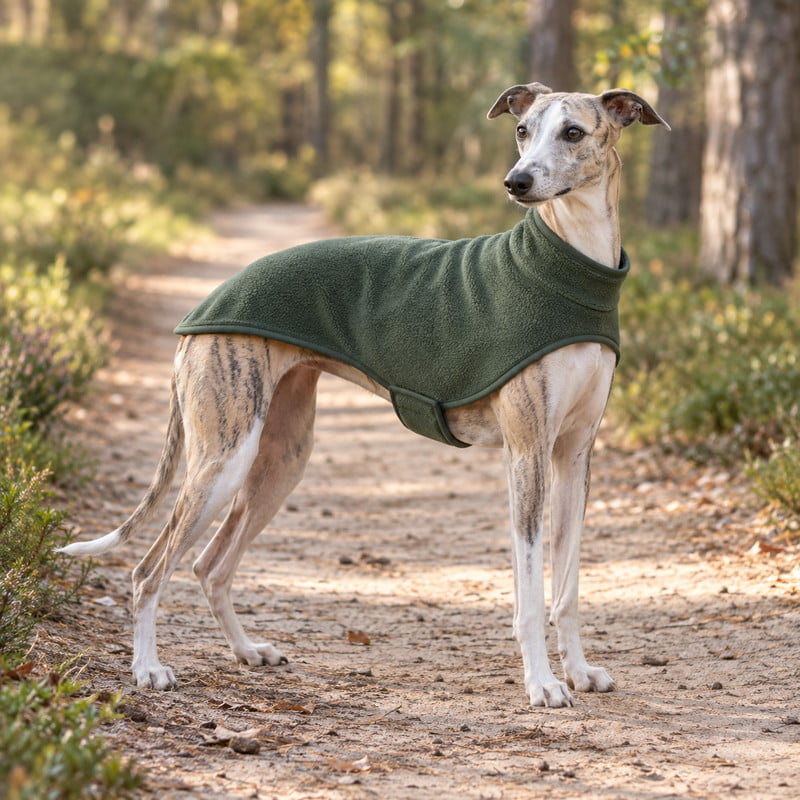
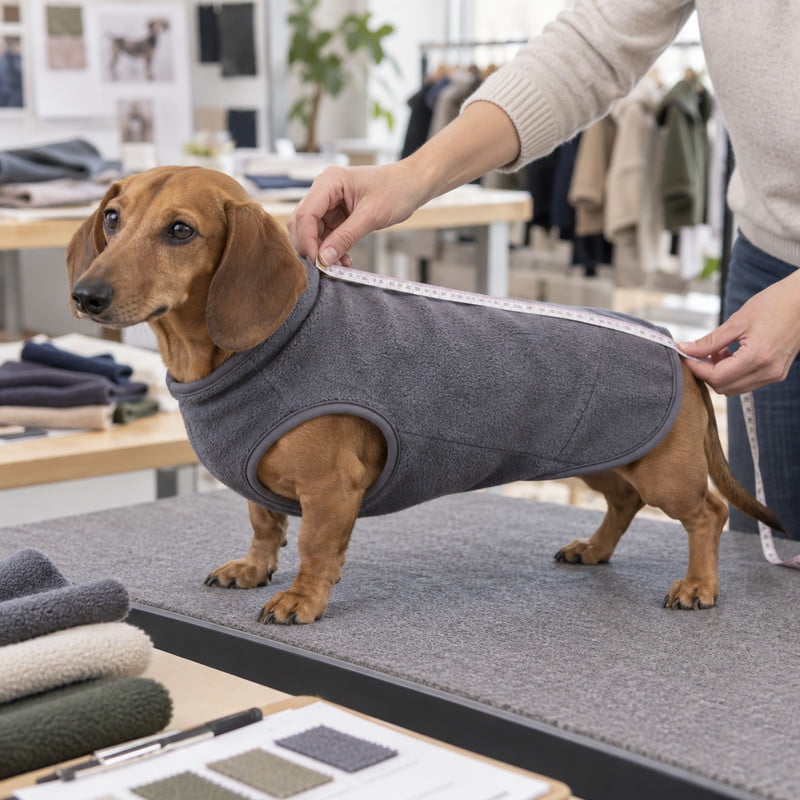
- Don’t map human S/M/L onto dogs.[^2] Ask for archetypes: deep-chested (e.g., whippets)[^3], broad-chested (e.g., bulldogs)[^4], long-bodied (e.g., dachshunds)[^5].
- Require a draft size map that links chest, back, and neck measurements to dog types and base sizes, not just labels.
- Check how grade increments change across size breaks (XS–S vs L–XL)[^6]. In our shop, chest steps widen above L to maintain ease on broader frames.
Fit testing is a protocol, not a try-on
- Specify the fit model mix: at least 2–3 archetypes per size band[^7] to catch edge cases.
- Define tools and points: tape, stand, chest/back/neck, strap positions, closure reach.
- Set pass/fail criteria: ease allowance ranges, seam sit, mobility (sit, walk, shake)[^8], photo/video angles.
- Limit iterations: three loops max before pattern reset. We document each loop in a fit report and cascade updates across all sizes. Include each loop in your sample development and approval process so version changes are traceable.
Materials and structure shift patterns
- Fabric thickness, stretch, quilting/fill, seam allowances, and closures all change ease.[^9]
- Ask for material and construction customization options and pattern or sewing spec changes by material family. For example, we reduce ease for 4-way stretch knits[^10] and add it back for quilted shells.
- Probe structure-specific tolerances: zipper chain types vs hook-and-loop, elastic recovery, binding width. Pre-shrink and conditioning steps matter.
Repeatability: tolerances and QC gates
- Require a measurement spec with acceptable tolerances per point and who measures them. Review the supplier’s manufacturing and quality-control capabilities to confirm how these checks are handled.
- Confirm inline vs end-of-line checks, AQL levels[^11], PP sample alignment, first-article approval[^12], and deviation handling.
- Ask about tools, calibration routines, training, and how patterns/SOPs lock between PP and bulk. We freeze pattern files and issue controlled redlines only with buyer sign-off.
Quick anecdote: Last winter we fitted a fleece for a deep-chested archetype. The first loop passed looks but failed ease on sit/stand. We widened chest grade steps in L–XL, tightened collar height, and adjusted Velcro overlap. The PP held in bulk because tolerances were explicit.
Example measurement points and typical tolerance ranges (supplier-side, verify for your project):
| Point | Typical Tolerance Range | Notes |
|---|---|---|
| Chest girth | ±1.0–1.5 cm | Wider for woven shells, narrower for stretch knits |
| Back length | ±1.0 cm | Keep tighter on raincoats to avoid drape issues |
| Neck circumference | ±0.8–1.2 cm | Watch collar height with closures |
| Strap positions | ±0.5 cm | Critical for harness-integrated designs |
Ranges vary by material and structure. Don’t treat these as universal.
Frequently Asked Questions
Do chest girth and back length alone guarantee a good fit?
No. Chest and back are core, but body type and ease allowance matter just as much. Deep- vs broad-chested dogs need different grade behavior. Add neck, strap/closure positions, and mobility checks. That’s why a pet clothing manufacturer should propose archetypes and a written fit protocol.
How many sizes should I sample before PP?
Sample the full size run if possible, or at least one per size band (e.g., XS–S, M, L–XL) with 2–3 fit models per band. You need enough coverage to catch edge cases. A good pet clothing manufacturer will help prioritize risk zones based on your target breeds. Prepare your target breeds, size bands, and fabric choices when you start a private-label project so the sample plan follows a clear brief.
What AQL and checks make sense for pet apparel?
Set AQLs that reflect your return risk: tighter on measurement points that drive fit (chest/back/neck, straps), standard levels on cosmetics. Combine inline checks with end-of-line audits and a first-article gate. Your pet clothing manufacturer should document tools, training, and calibration steps.
How do materials change my size chart?
Stretch knits, quilted fills, and different closure systems change ease and tolerances. Expect pattern tweaks, seam allowance adjustments, and sometimes different grade increments. Ask your pet clothing manufacturer for material-family spec sheets and pre-shrink/conditioning routines to keep PP-to-bulk consistent.
Conclusion
Choosing the right pet clothing manufacturer is about systemizing fit: clear size schemes by dog archetype, a repeatable fit protocol, material-aware specs, and locked tolerances/QC gates. If you want fewer returns and cleaner reviews, contact FungoMate. At FungoMate (Ningbo), I can share our fit report template and PP-to-bulk checklist, then tailor them to your brand.
[^1]: "Comfort evaluation of dog apparel using 3D virtual fitting with ...", https://pmc.ncbi.nlm.nih.gov/articles/PMC13187249/. Empirical studies in apparel e-commerce consistently report that size and fit issues are among the most frequent reasons for returns, supporting the general mechanism that inadequate grading for body variation drives higher return rates. Evidence role: statistic; source type: paper. Supports: that size and fit problems are a leading cause of returns in online apparel retail, implying that poor accommodation of body-type variation increases return risk.. Scope note: Available quantitative evidence is largely from human apparel; direct studies on pet clothing returns are scarce. [^2]: "Genetic variations and dog breed identification using inter-simple ...", https://pmc.ncbi.nlm.nih.gov/articles/PMC7605226/. Comparative canine morphology research documents pronounced inter-breed differences in proportions (e.g., chest depth, limb length, trunk length), indicating that simple human-style S/M/L categorization does not reflect canine sizing needs. Evidence role: general_support; source type: research. Supports: that domestic dogs exhibit extensive inter-breed variation in body proportions and dimensions, far exceeding what simple S/M/L labels capture.. Scope note: Morphological studies describe variability but do not prescribe specific garment size schemes. [^3]: "Whippet - Wikipedia", https://en.wikipedia.org/wiki/Whippet. Breed reference descriptions characterize the Whippet as deep-chested, aligning the breed with a deep-chested morphology archetype. Evidence role: definition; source type: encyclopedia. Supports: that Whippets are described as deep-chested in breed overviews.. [^4]: "Bulldog - Wikipedia", https://en.wikipedia.org/wiki/Bulldog. Breed summaries describe Bulldogs as having a broad, deep chest, supporting their use as a broad-chested archetype. Evidence role: definition; source type: encyclopedia. Supports: that Bulldogs are commonly described as broad- or wide-chested in breed references.. [^5]: "Dachshund - Wikipedia", https://en.wikipedia.org/wiki/Dachshund. Breed overviews note that Dachshunds are long-bodied with short limbs, matching a long-bodied morphology archetype. Evidence role: definition; source type: encyclopedia. Supports: that Dachshunds are characterized by an elongated body relative to height.. [^6]: "3 Best Pattern Making & Grading Books I Recommend - Just Patterns", https://just-patterns.com/blogs/blog/my-top-3-favorite-pattern-making-grading-books?srsltid=AU7gw4UpI1AwsVJsyNncFNzxbr_gigRRKN93-EprMEqHLvWMiathikMq. Pattern grading texts describe adjusting grade rules at size breakpoints to better track proportion changes across the size spectrum. Evidence role: expert_consensus; source type: education. Supports: that apparel grading practice allows for different grade rules at various size ranges to accommodate non-linear changes in body proportions.. Scope note: Canonical references focus on human apparel; application to canine garments is by analogy. [^7]: "Fit models' roles in identifying fit issues in the apparel ...", https://par.nsf.gov/servlets/purl/10639626. Apparel product development guides recommend evaluating multiple fit models across the size range to identify fit issues not evident in a single model. Evidence role: general_support; source type: education. Supports: that best practices in apparel development advocate testing across multiple fit models and sizes to validate grading and capture edge cases.. Scope note: Guides do not prescribe a fixed number of models; the suggested 2–3 per band is a pragmatic heuristic. [^8]: "Canine Comprehensive Mobility Assessment - PubMed", https://pubmed.ncbi.nlm.nih.gov/35562221/. Veterinary examination references emphasize evaluating posture and gait through movements like sitting and walking to assess mobility, supporting the inclusion of such checks in fit testing. Evidence role: mechanism; source type: education. Supports: that observing canine posture and gait (e.g., sit, stand, walk) is a standard way to assess mobility, which can be adapted to detect garment-induced restriction.. Scope note: Clinical movement assessments are not designed for apparel testing; the application here is by extension. [^9]: "What Is Ease in Sewing for a Perfect Fit - B-Sew Inn", https://www.bsewinn.com/blogs/inspiration/what-is-ease-in-sewing?srsltid=AU7gw4WX34l3rR_wc0mvrGhJZ9j12jd5QhfvjVLnO8Sim4_-vR0VF8dW. Sewing and patternmaking references explain that ease depends on fabric properties: stretch fabrics can use reduced or negative ease, while bulky or insulated constructions generally need more ease. Evidence role: mechanism; source type: encyclopedia. Supports: that fabric stretch can reduce or reverse ease (negative ease) and that bulkier materials require additional ease to preserve mobility and fit.. Scope note: Most references discuss human garments; specific adjustments for canine apparel may differ. [^10]: "Can someone explain the concept of ease to me? : r/knitting - Reddit", https://www.reddit.com/r/knitting/comments/u4fvt3/can_someone_explain_the_concept_of_ease_to_me/. Patternmaking references define negative ease as common in knit garments due to fabric stretch, supporting reduced ease for 4-way stretch materials. Evidence role: definition; source type: encyclopedia. Supports: that knit garments, especially with significant stretch, often incorporate reduced or negative ease compared to wovens.. Scope note: Principle is general; specific numeric adjustments depend on fabric and design. [^11]: "Acceptance sampling - Wikipedia", https://en.wikipedia.org/wiki/Acceptance_sampling. Standard references define AQL as a specified quality level used in acceptance sampling (e.g., ISO 2859), supporting its use in QC planning. Evidence role: definition; source type: encyclopedia. Supports: that Acceptance Quality Limit (AQL) is a standard concept in acceptance sampling used to set inspection criteria in quality control.. Scope note: AQL frameworks define methodology but do not prescribe particular levels for a given product category. [^12]: "9102 First Article Inspection Requirement", https://iaqg.org/standard/9102-first-article-inspection-requirement/. IAQG describes a standardized first article inspection process with consistent verification and documentation requirements. Evidence role: definition; source type: standards body. Supports: That first article inspection is a formal verification and documentation process. Scope note: The standard was developed primarily for aviation, space and defense. It is cited here to explain the FAI concept, not as a certification requirement for pet apparel.