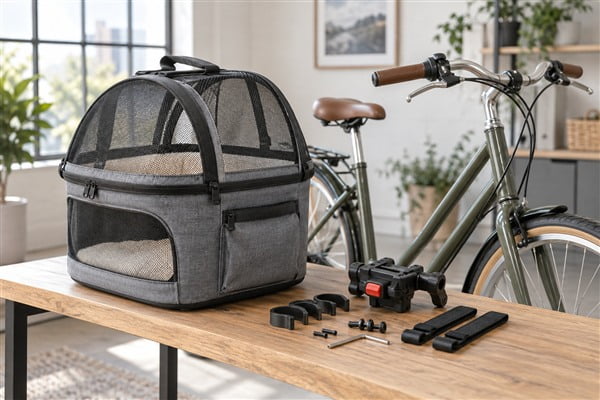


Pet backpacks often get pitched as do‑it‑all carriers, but that’s how ranges get messy. Teams chase overlap, comfort slips, and airline boarding risk creeps in.[^1] The fix is simple: map three SKUs to three scenarios and weight bands, then lock boundaries via sampling and real feedback. Start by reviewing the pet travel bags and carriers range to compare the available formats before narrowing your launch plan.
Build a focused product range by launching a trio: a city soft tote for short urban moves, an airline soft‑sided under‑seat carrier[^2], and a hike‑ready backpack with load transfer. Segment by pet weight (≤5 kg / 5–8 kg / 8–12 kg), avoid overlap, and verify airline fit by route—never promise universal compliance.
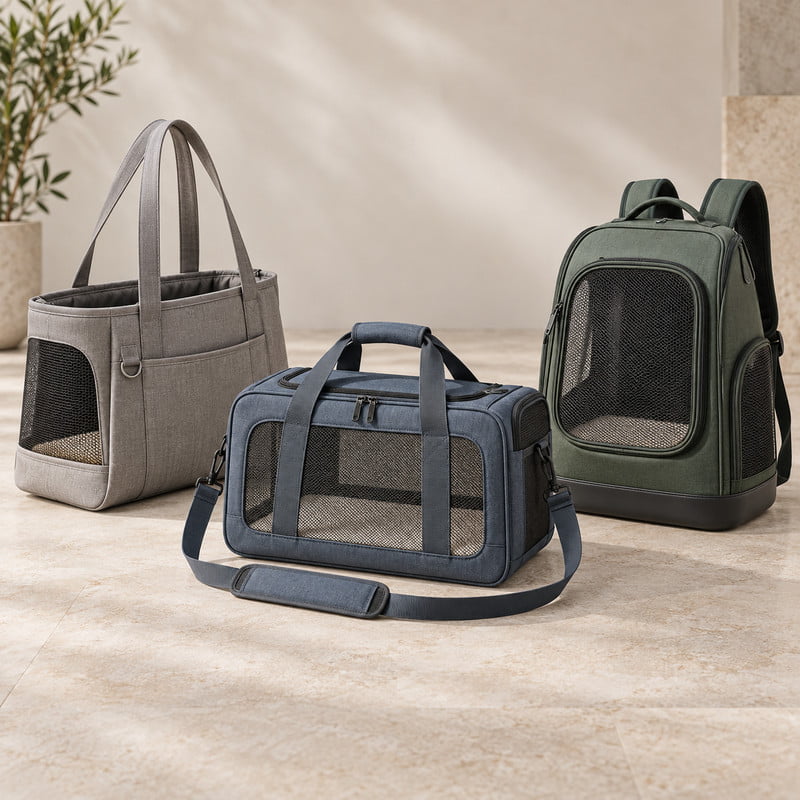
You now have a clean roadmap. Below I show how scenario boundaries, weight bands, and airline constraints shape pet backpacks, totes, and shoulder carriers—based on multi‑round sampling we run for OEM/ODM clients.
Why start with three scenario-led SKUs for pet backpacks and carriers?
You want one carrier to do city, flights, and hikes. I get it. But every compromise hurts comfort or safety. The smarter move is a minimal trio with hard boundaries—and iterative sampling to tune each SKU to its job.
Launch three SKUs: city tote for quick urban trips, airline soft‑sided carrier sized to the tightest common under‑seat envelope, and a hike backpack with reinforced support. Keep features scenario‑specific to prevent overlap that blurs use cases.
Dive deeper
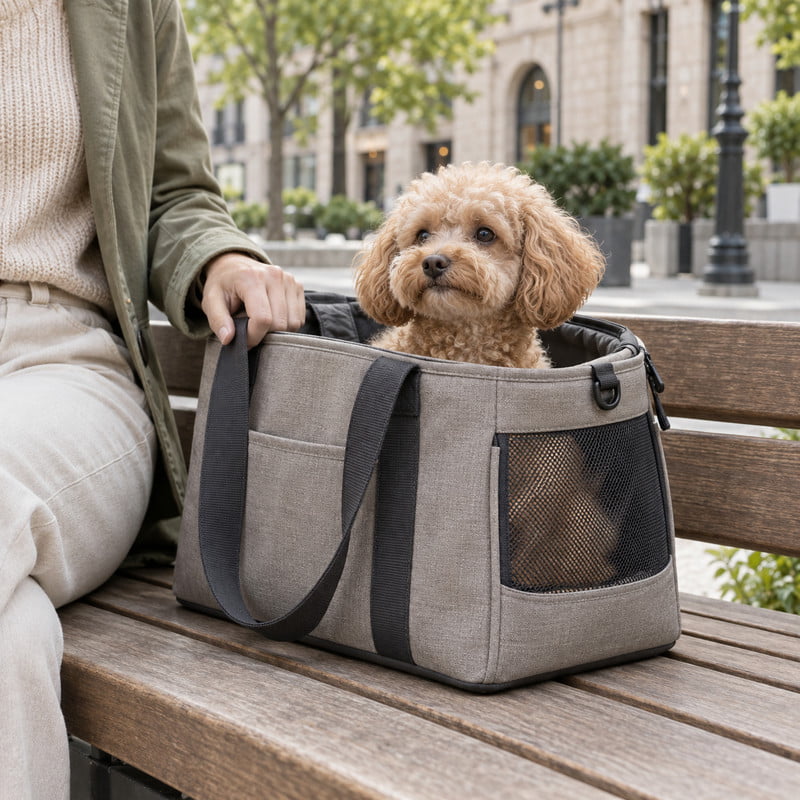
- City soft tote: low weight, quick access, short duration. Prioritize light fabrics, simple closure, and small mesh windows. Keep structure minimal but stable.
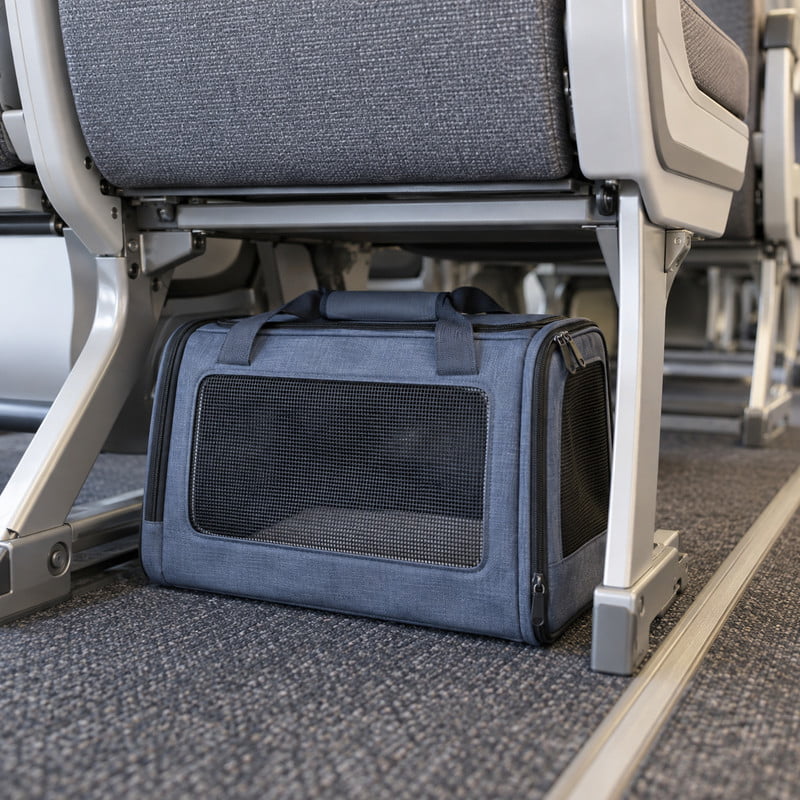
- Airline carrier: soft sides with compressibility, stable base, generous mesh, and foldability. Size to the tightest common under‑seat range for target routes; publish “to be verified by route/airline.”
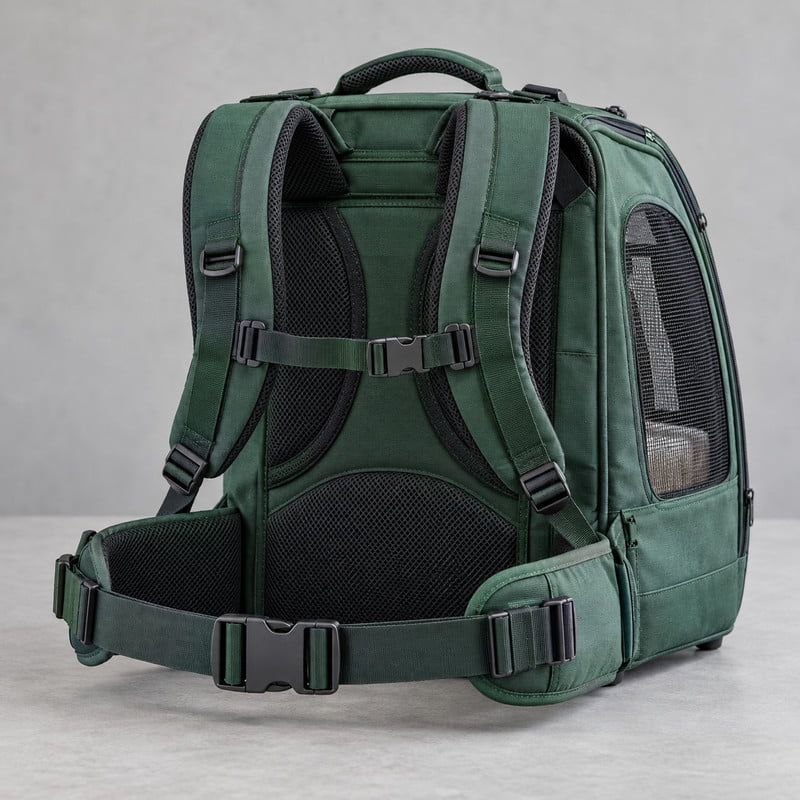
- Hike backpack: load transfer via shoulder straps, chest strap[^3], and waist belt; bigger mesh panels; reinforced base and back panel for longer carries.
I once widened a tote strap by 8 mm after a buyer flagged shoulder bite at 4.5 kg. For the airline unit, we stiffened the base insert and added a 20% larger mesh panel after a “warm spot” complaint. Tiny, scenario‑tuned tweaks move comfort and handling from “okay” to “confident.”
When you move from range planning to supplier selection, use our guide on choosing a pet carrier manufacturer.
How do weight bands guide pet backpacks and carriers?
Guessing size leads to bad ergonomics. Weight bands are the first gate.[^4] They determine structure, strap geometry, ventilation area, and base stiffness. I always start with bands, then refine with loaded sample tests. Document the material and construction customization options separately for each format.
Segment decisions by weight: ≤5 kg for city totes, 5–8 kg as the airline carrier’s practical core, and 8–12 kg for hike backpacks.[^5] Scale strap width, back panel reinforcement, and mesh area with weight to keep comfort and safety in balance.
Dive deeper
- ≤5 kg: prioritize light carry and quick access. Narrower straps are fine; minimal frame; moderate mesh.
- 5–8 kg: airline carrier sweet spot. Use wider straps[^6], stabilizing base insert, and balanced mesh for airflow without collapsing.
- 8–12 kg: hike backpack only. Reinforced back panel, waist belt for load transfer[^7], and larger mesh panels to reduce heat buildup.[^8]
In one project, we increased waist belt foam density for an 8.5 kg dog, then shifted the chest strap height by 15 mm to prevent clavicle pressure. Feedback was immediate: “Longer carry feels stable.”
Review the supplier’s manufacturing and quality-control capabilities before asking them to reproduce those support features at scale.
How do you manage airline risk for pet backpacks and carriers without overpromising?
Airline rules vary by route and aircraft.[^9] One “compliant” size won’t cover everything. Boarding rejection hurts. Build for the tightest common under‑seat envelope in target markets and verify fit with loaded samples—route by route.
Design the airline carrier to soft‑side compress and slide under the tightest common under‑seat range. Validate with loaded samples. Publish “route/airline to be verified” guidance instead of blanket compliance claims. Never promise universal approval.[^10]
Dive deeper
What we do:
- Define target routes and carriers early.
- Size to a conservative under‑seat envelope and use soft sides with controlled compressibility.[^11]
- Add a stable base and low‑sag frame to prevent collapse.[^12]
- Test loaded samples (real pet weight equivalents) and record fit photos. Include these checks in your sample development and approval process.
We once trimmed height by 10 mm and changed zipper arcs to reduce “roof contact” under a narrow seat. That tiny change turned a borderline fit into a smooth slide‑in across two carriers—while staying honest about route verification.
Frequently Asked Questions
Should I try a single carrier for city, flights, and hikes?
I don’t recommend it. Each scenario demands different ergonomics. A catch‑all adds weight, reduces ventilation, and raises airline rejection risk. A focused trio—tote, airline soft carrier, hike backpack—performs better and makes customer guidance clearer.
What if my brand wants only two SKUs to start?
Pick city tote (≤5 kg) and airline soft‑sided carrier (5–8 kg). Add the hike backpack later once size ranges and outdoor positioning are validated. Keep boundaries firm to avoid feature creep.
How do I talk about airline compliance in listings?
State target routes and dimensions, note soft‑side compressibility, and add “to be verified by route/airline.” Show loaded sample photos. Avoid universal claims. Buyers value transparent guidance more than risky promises.
Conclusion
A clean three‑SKU plan for pet backpacks—city tote, airline soft‑sided carrier, and hike backpack—reduces overlap, clarifies ergonomics, and lowers boarding rejection risk. If you’re mapping weight bands and scenarios, I can share sampling notes, iterate fast, and help lock specs. Contact FungoMate to discuss routes, bands, and prototype scheduling.
[^1]: "Flying with a Pet | US Department of Transportation", https://www.transportation.gov/airconsumer/flying_with_pet. The U.S. Department of Transportation explains that airlines determine whether pets may travel in the cabin and require that animals remain in carriers that fit under the seat; travelers who do not meet an airline’s specific requirements can be refused transport. Evidence role: general_support; source type: government. Supports: Airlines set their own in‑cabin pet policies and require carriers to fit under the seat; failure to meet airline‑specific rules can result in denial of transport.. Scope note: This source substantiates policy variability and possible refusal but does not quantify risk increases for multi‑use carriers. [^2]: "14 CFR 121.589 -- Carry-on baggage. - eCFR", https://www.ecfr.gov/current/title-14/chapter-I/subchapter-G/part-121/subpart-T/section-121.589. Federal aviation regulations require carry‑on baggage to be stowed in approved locations (such as under the seat or in overhead bins), and in‑cabin pet carriers are handled as carry‑on items for stowage purposes. Evidence role: mechanism; source type: government. Supports: Carry‑on items must be stowed in approved locations such as under the seat or in overhead bins, which applies to in‑cabin pet carriers.. Scope note: The regulation addresses carry‑on stowage generally and does not discuss pet carriers specifically. [^3]: "Effect of single and double backpack strap loading on gait and perceived ...", https://pubmed.ncbi.nlm.nih.gov/26406186/. Controlled evaluations of backpack harness setups report that sternum (chest) straps help keep shoulder straps in place and reduce pack sway during walking, improving subjective stability. Evidence role: mechanism; source type: paper. Supports: Studies assessing backpack harness configurations indicate sternum straps maintain shoulder strap position and can reduce pack motion during gait.. Scope note: Evidence focuses on human gait with backpacks and does not directly test pet carriers. [^4]: "Development and Experimental Verification of an Ergonomic ... - PMC", https://pmc.ncbi.nlm.nih.gov/articles/PMC7245669/. Occupational health ergonomics guidance notes that heavier backpack loads increase shoulder pressure and recommends wide, padded straps and supportive harness features to distribute load and improve comfort. Evidence role: mechanism; source type: government. Supports: Ergonomic guidance indicates heavier carried loads increase shoulder pressure and recommends wide, padded straps and supportive features to distribute load.. Scope note: Guidance typically addresses human backpack use and does not prescribe design parameters for pet carriers. [^5]: "Flying with a Pet | US Department of Transportation", https://www.transportation.gov/airconsumer/flying_with_pet. Reference overviews of airline pet travel note that, in markets where in‑cabin pets are permitted, carriers frequently impose a maximum combined pet‑and‑carrier weight on the order of 7–8 kg, with substantial variation between airlines and routes. Evidence role: general_support; source type: encyclopedia. Supports: General references describe that where in‑cabin pets are allowed, many airlines set maximum combined pet‑and‑carrier weights around 7–8 kg, though policies vary.. Scope note: This is a high‑level summary rather than a universal standard, and specific airline rules prevail. [^6]: "Impact of Backpacks on Ergonomics: Biomechanical and Physiological ...", https://pmc.ncbi.nlm.nih.gov/articles/PMC9180465/. National occupational health ergonomics guidance recommends wide, padded shoulder straps to spread load across a greater area of the shoulder and thereby lower contact pressure and discomfort. Evidence role: mechanism; source type: government. Supports: Ergonomic agencies advise using wide, padded shoulder straps to distribute load over a larger area and reduce pressure.. Scope note: Guidance does not specify exact widths and is directed at human backpack users. [^7]: "The Influence of Backpack Weight and Hip Belt Tension on Movement and ...", https://pmc.ncbi.nlm.nih.gov/articles/PMC6011123/. Biomechanics research on backpack carriage demonstrates that hip belts redistribute a significant portion of pack weight to the pelvis, thereby reducing shoulder strap forces and improving comfort during walking. Evidence role: mechanism; source type: paper. Supports: Experimental load‑carriage studies show that engaging a hip belt shifts part of the pack load to the pelvis, lowering shoulder strap tension and perceived discomfort.. Scope note: Evidence derives from human subject studies and is applied here by analogy to pet‑carry backpacks. [^8]: "Animal Welfare Act and Animal Welfare Regulations", https://www.aphis.usda.gov/sites/default/files/AC_BlueBook_AWA_508_comp_version.pdf. U.S. Animal Welfare Act transport regulations for dogs and cats require significant ventilation openings across enclosure walls to promote adequate airflow, underscoring that vent area is critical to limiting heat accumulation during transport. Evidence role: mechanism; source type: government. Supports: Animal transport standards mandate substantial ventilation openings on transport enclosures to facilitate airflow and limit heat buildup.. Scope note: These regulatory provisions apply to regulated transport contexts and do not set design specifications for consumer in‑cabin carriers. [^9]: "Pet Travel | Domestic and International Travel With a Pet", https://www.aphis.usda.gov/pet-travel. The U.S. Department of Transportation advises that airlines set their own policies for pet travel and that passengers should check requirements for the specific flight, as allowances and restrictions can differ by carrier and aircraft. Evidence role: general_support; source type: government. Supports: Regulators direct travelers to consult airlines because pet policies and acceptance vary by carrier and flight.. Scope note: The guidance is advisory and does not enumerate particular route‑ or aircraft‑level differences. [^10]: "Domestic and International Travel With a Pet - USDA-Aphis", https://www.aphis.usda.gov/pet-travel. Government travel guidance defers in‑cabin pet acceptance criteria to individual airlines, meaning there is no single standard that ensures a specific carrier will be approved across all carriers and routes. Evidence role: general_support; source type: government. Supports: Acceptance criteria for pets in the cabin are determined by individual airlines rather than a single universal standard.. Scope note: This establishes discretion at the airline level but does not preclude convergence among some carriers’ policies. [^11]: "Travel safely with your pet", https://www.humaneworld.org/en/resources/travel-safely-your-pet-car-airplane-ship-or-train. Animal welfare guidance notes that many airlines accept soft‑sided carriers for in‑cabin travel provided they fit under the seat, and that flexible sides can help the carrier conform to the available space. Evidence role: general_support; source type: institution. Supports: Animal welfare organizations advise that many airlines permit soft‑sided carriers that fit under the seat and note that flexibility can aid fitting.. Scope note: This reflects common practice rather than a regulatory requirement and policies vary by airline. [^12]: "[PDF] Enclosure Requirements for Dogs and Cats in Air Cargo Transport", https://www.aphis.usda.gov/sites/default/files/transport-enclosure-poster.pdf. Federal animal transport standards specify that enclosures must be structurally sound and have flooring that prevents sagging and protects occupants, supporting the design need for a stable base and frame. Evidence role: mechanism; source type: government. Supports: Transport regulations require enclosures to be structurally sound with flooring that prevents sagging and protects the animal.. Scope note: The cited standards govern regulated carriers and handlers rather than retail consumer products used in‑cabin.