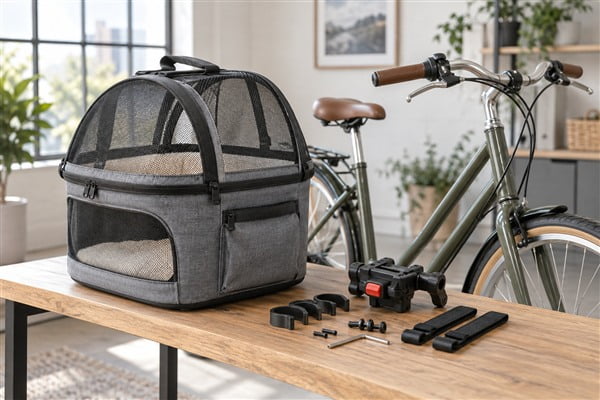


A carrier instruction leaflet is often written after the product is approved, when there is little time to check whether the steps match the final construction. Missing setup information then becomes a retail support problem. For brands sourcing pet travel bags and carriers, instructions should develop alongside the physical sample.
Build the manual around the user’s tasks: identify parts, assemble, verify readiness, use within defined limits, fold, clean, and inspect. Check those tasks on the production-intent product before approving print files.
What should the manual cover first?
Identify the carrier model, version, included parts, and intended use. Distinguish standard parts from optional accessories. If several sizes or variants share one booklet, make the differences visible at the point where they matter.
IEC/IEEE 82079-1 instruction principles provides general principles for preparing useful instructions. Apply them to the actual carrier rather than copying a generic bag leaflet. The document should help a first-time user complete the relevant task without guessing.
Keep the booklet linked to the approved product through ISO 10007 configuration-management guidance. A revised support panel, buckle, or folding arrangement may require changed illustrations even when the model name remains the same.

How should setup be shown?
Start with a clear parts inventory and an orientation view. Show where the base panel, removable mat, frame pieces, and straps belong. Use consistent names in pictures, text, packaging, and service information.
Break assembly into distinct actions and show the completed state. Explain how users verify that supports and closures are correctly positioned. Do not substitute “assemble securely” for a visible step that the customer can check.
Test the instructions with someone unfamiliar with the sample. Observe where they hesitate or make an incorrect assumption, then revise the explanation. Include this review in the sample development process and record which product version was used.
What use information belongs beside those steps?
State the intended animal size range, load assumptions, supervision requirements, and limits supported by the product’s evaluation. Keep ordinary carrying, airline use, and vehicle restraint claims distinct. A strap shown in a photograph should not imply a purpose that has not been established.
Cat Friendly Homes carrier guidance offers useful context for cat-carrier selection and handling. For cabin-travel products, consult IATA cabin-travel guidance and the intended operator’s current conditions. Avoid a general airline-approved statement when acceptance depends on the carrier and journey.
Explain entrances, closures, and any supplied internal attachment according to the approved design. Warnings should be relevant and placed where they help the user act, rather than collected as an unreadable block at the end.

How should folding and care be explained?
Show removal or repositioning of internal panels before folding where required. Identify parts that must not be forced. Include a final folded view and a method of storing loose components so the next setup is straightforward.
Review folding instructions whenever carrier structural development changes the frame or panel arrangement. A sequence from the earlier version can damage the updated product even if the illustration looks broadly similar.
Separate removable textile care from cleaning the structured carrier. Use ISO 6330 washing and drying procedures where applicable to the testing plan and ISO 3758 care-label symbols for relevant symbols. State drying and reassembly requirements based on the approved materials and construction.
How should retail information stay consistent?
When preparing a carrier RFQ, include instruction languages, printing format, translation responsibility, and approval dates. Ask the supplier to identify the booklet within the packing specification so a different model’s leaflet is not substituted.
Coordinate identification using GS1 barcode implementation steps and consider the GS1 GTIN Management Standard when product changes affect trade-item identity. A QR code may supplement instructions, but the destination must identify the correct version and remain accessible.
Review the supplier’s manufacturing capabilities for document control and packing checks. Treat language variants and distributor branding as controlled customization options, with a defined owner for approving translated wording and illustrations.
Retain the unfamiliar user’s observations with the approval file. A successful demonstration by the designer is different from an independent setup attempt, because the designer already knows which movements and orientations the pictures are intended to show.
Frequently Asked Questions
Can one booklet cover every carrier?
Only if users can clearly identify the steps relevant to their model. Separate instructions are preferable when construction or use differs enough to create confusion.
Can diagrams replace all text?
Not always. Diagrams are useful for orientation and sequence, but limits, exclusions, care details, and unusual actions may need concise wording and appropriate translation.
Approve instructions with the sample
Send the product version, parts list, intended uses, care evidence, and language requirements. Then contact FungoMate to align instructions with development. A checked manual helps the retail product arrive as a usable system rather than a carrier accompanied by generic paperwork.