


A distributor may need one shoulder strap or base panel long after the original carrier order ships. If that component has no part number or compatibility record, a simple request becomes a search through old photographs. After-sales planning should therefore begin while the pet travel bags and carriers specification is still being approved.
Create a controlled spare-parts list with compatibility, replacement responsibility, stock policy, and instructions. Separate parts customers can replace from repairs that require trained service or a complete product assessment.
Which components deserve a spare-parts plan?
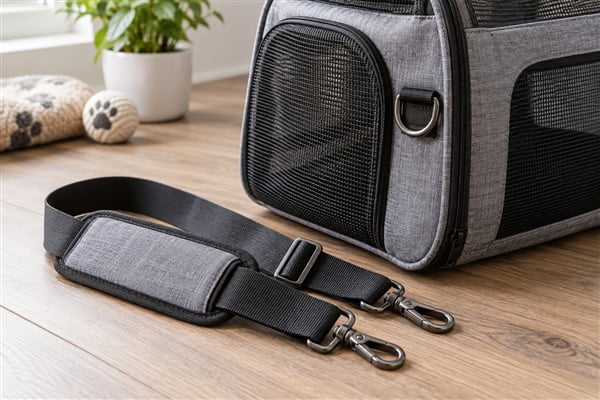
Start with removable pads, shoulder straps, detachable bases, and other components designed for replacement. For wheels, fasteners, and structural parts, confirm whether removal and refitting can be performed reliably outside the factory. Do not promise universal repairability simply because a screw is visible.
Record each component’s drawing, dimensions, material, finish, attachment method, and product versions served. ISO 10007 configuration-management guidance offers a useful reference for keeping these identities controlled. A visually similar buckle or strap is not necessarily interchangeable.
Review spare compatibility whenever carrier structural development changes the carrier. A thicker base panel, different clip, or revised mounting spacing can invalidate an older spare even when the retail model name remains unchanged.
How should compatibility be communicated?
Use a parts table that links carrier model, revision, size, color where relevant, and spare reference. Include photographs from useful angles, but do not rely on photographs alone. Specify which dimensions or markings allow a distributor to identify the correct version.
For separately ordered items, discuss identification through GS1 GTIN Management Standard and practical scanning through GS1 barcode implementation steps. Internal service codes and retail identifiers serve different purposes; agree the receiving system before printing labels.
Include a simple request form asking for the carrier identifier, affected part, photographs, and purchase information appropriate to the service policy. This helps the supplier distinguish normal replacement from a failure requiring investigation.
What should be checked before a spare is approved?
Fit the spare to representative carriers from the intended compatibility range. Check attachment, operation, clearance, and the installed result. A replacement shoulder strap should be reviewed as an assembly, not only as a length of webbing.
Where relevant, ASTM D6775 webbing test method can support component testing discussions. For metal parts, consider ISO 9227 salt-spray methods under an agreed exposure plan. Neither method alone establishes that the repaired carrier retains every original performance claim.
Review replacement instructions during the sample development process. Identify necessary tools, installation sequence, checks before use, and situations where the customer should stop and seek service. Use clear images and avoid suggesting that users modify structural seams or improvise incompatible components.

How should distributors plan stock and replenishment?
Ask for minimum orders, replenishment lead times, storage conditions, and an availability period for each approved spare. Base opening stock on expected sales, installed product volume, and actual service information as it develops. Do not present a guessed failure rate as a forecast.
When preparing a carrier RFQ, separate initial spare stock from future replenishment pricing. Clarify what happens if a material or component is discontinued. Approved alternatives should pass a documented compatibility review rather than being substituted without notice.
Discuss ICC Incoterms guidance when agreeing delivery responsibilities and keep packaging levels aligned with GS1 US packaging-level guidance where the distributor uses GS1 identification. Small spare orders can have different handling costs from complete carrier shipments.
Compare compact protective packaging with the spare’s damage risks. UPS dimensional-weight guidance is useful for checking dimensional-weight implications. Align packaging, instruction languages, and distributor branding with the available customization options, without making a low-value spare unnecessarily expensive to dispatch.
Keep returned-part observations in a simple service log, including product version and installation history. Review recurring issues before the next purchase order. Spare stock should support a sound product, not conceal a construction problem that deserves corrective action.
Frequently Asked Questions
Should every color have separate spare stock?
Only where appearance or material differences require it. A shared neutral replacement may simplify inventory if the brand approves the visual result. Keep structural compatibility separate from color preference and confirm both with the customer.
Can the supplier guarantee parts indefinitely?
Ask for a defined commercial commitment instead. Review the supplier’s manufacturing capabilities, component sourcing, and discontinuation process. Agree notice periods, final-order opportunities, and document access rather than relying on an open-ended verbal promise.
Build service into the sourcing brief
Send a proposed parts list, compatibility table, replacement policy, and distributor coverage plan. Then contact FungoMate to discuss spare sourcing alongside the carrier order. A modest, clearly controlled service range can make support more predictable and reduce the risk of supplying a component that fits visually but fails to function correctly.