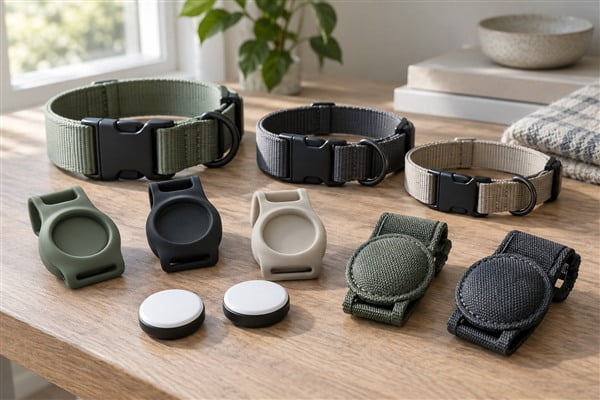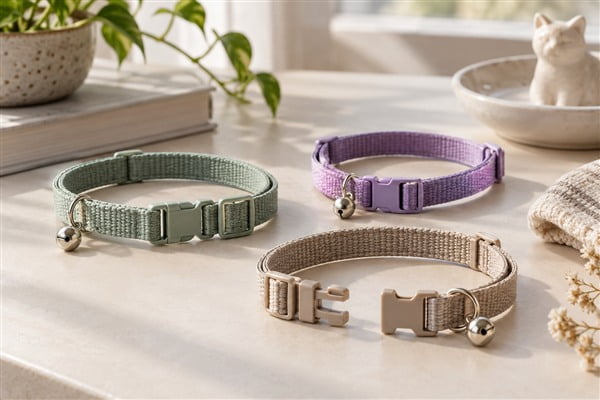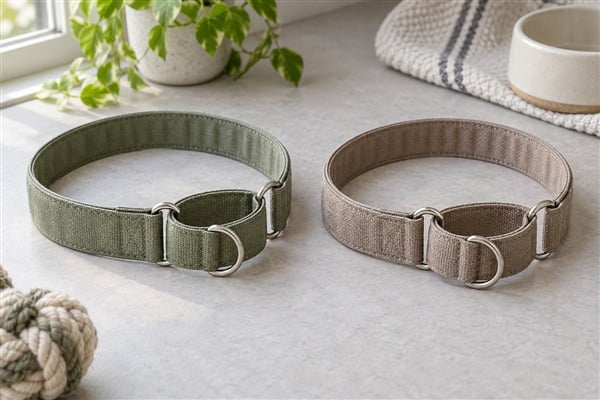


A harness may fit correctly during adjustment and become looser during use. Buyers assessing harnesses and walking gear should examine the slider, webbing, threading route, and assembled strap together. A component described as “non-slip” is not enough to establish how the finished harness behaves.
Define the approved slider-and-strap combination, record the starting position, and assess movement under agreed conditions. Separate webbing stretch, adjustment migration, and incorrect threading before deciding what to change.
What should the adjustment specification include?
Record slider material, internal dimensions, bar geometry, surface condition, and orientation. Identify the webbing code, width, thickness, weave or coating, and any finish that affects contact. Include a drawing or photograph of the exact threading route.
When building a harness size range, make adjustment retention part of the fit discussion. The AKC measuring guide supports consistent body measurements, while AKC harness-fit guidance provides context for appropriate fit. Neither establishes that a particular slider retains its setting.
Also review the connection principles in specifying leash clips and D-rings. Hardware compatibility depends on the complete assembly. A nominal webbing width does not describe how a soft, thick, slippery, or coated strap passes through the actual slot.
How do you identify what is moving?
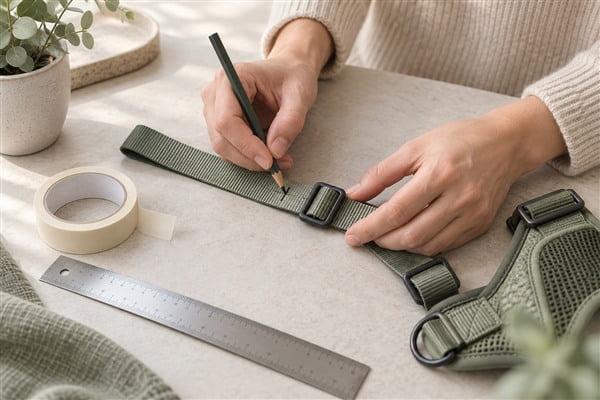
Mark the strap’s starting position at defined reference points. Photograph the routing and record the adjusted length. After the agreed evaluation, compare those points and inspect whether the strap moved through the slider, stretched, or changed shape elsewhere.
ASTM D6775 webbing test method concerns webbing breaking strength and elongation. It can help characterize the material, but it is not a universal slider-slippage test. Ask the provider to explain the method used for adjustment retention separately.
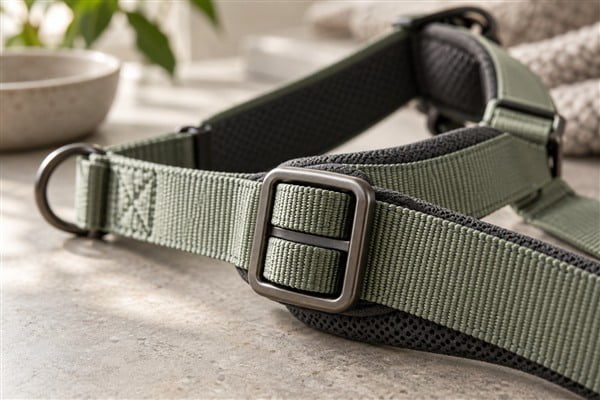
Check assembly errors first. Reversed parts, omitted passes, insufficient tail length, or a twisted strap can change behavior. Keep the required route consistent across samples before comparing slider candidates.
What conditions should a buyer agree?
Define the assembly, adjustment position, load direction, conditioning, duration or cycling sequence, and acceptable movement. Include representative positions near the usable adjustment boundaries where relevant. Do not invent a universal load or movement limit without a design-specific basis.
Use suitable fixtures and test specimens rather than conducting overload or escape trials on animals. Separate controlled mechanical checks from supervised ordinary fit observations. A successful walk is useful feedback, but it is not a substitute for a defined retention evaluation.
Review customization options before replacing one part. A new slider may require a different strap, routing, or tail management. Evaluate the proposed combination rather than approving a loose component in isolation.
Can cleaning and exposure change adjustment behavior?
Include conditions relevant to the intended care and environment. ISO 6330 washing and drying procedures provides washing and drying procedure references for suitable textile components. Recheck routing, strap feel, and retained length after the selected treatment.
For metallic sliders, ISO 9227 salt-spray methods can inform a corrosion-testing discussion with agreed exposure and criteria. Check function as well as appearance afterward. Surface changes or damage may affect operation even if the part remains intact.
The ISO 105-X12 rubbing-fastness method can support relevant color-transfer evaluation for strap materials. Keep that result distinct from friction or retention: good rubbing fastness does not prove a strap will hold its adjustment.
How do you control the approved combination in production?
Use the sample development process to record the tested slider, webbing, route, adjustment range, and evaluation results as one configuration. ISO 10007 configuration-management guidance provides a useful reference for keeping these identities aligned.
Review manufacturing capabilities for incoming dimensional checks, thread-path inspection, operator instructions, and control of substitute parts. Photograph a correct assembly and important defects so inspectors do not need to infer the intended routing.
When external testing is used, consult ISO/IEC 17025 laboratory guidance to frame questions about competence and relevant scope. Ask reports to identify the actual assembly, not merely the slider supplier’s product name.
Record customer feedback by failure mode. “Gets loose” can describe incorrect initial fitting, movement through a slider, a changing strap, or a different issue. Use that distinction to improve the correct part of the specification.
Keep the adjustment instructions available during inspection. An approved design can still become inconsistent when different operators thread straps differently, so verification should cover assembly practice as well as component purchasing.
Frequently Asked Questions
Will a metal slider always hold better than plastic?
No. Geometry, surface, webbing, routing, and operating conditions all matter. Compare the actual combinations using the same procedure.
Can a strap be changed without repeating checks?
Only after a documented review establishes what evidence remains applicable. Thickness, weave, and finish changes can affect the interface.
To evaluate adjustment retention, contact FungoMate with your harness sample, slider and webbing specifications, intended size range, and the behavior you need to investigate.