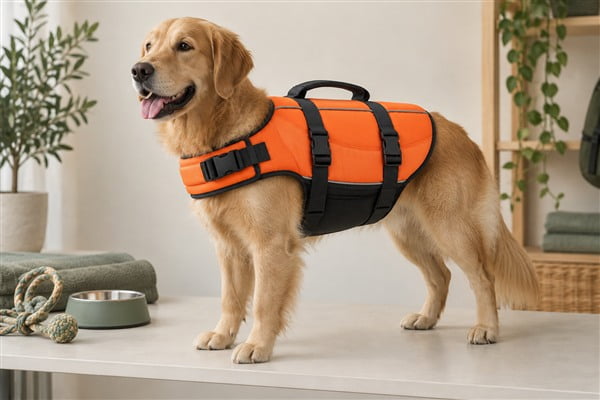
A dog life jacket can look convincing in a catalogue while its test evidence remains unclear. Buyers adding flotation products to a pet apparel range need to examine the complete design, not only the foam thickness or a photograph of a swimming dog.
Ask what was tested, how it was tested, which sizes and revisions were covered, and what counted as a pass. Fit, flotation behavior, handle strength, and production consistency require separate evidence.
What use and claims are being proposed?
Define the intended activity and customer before reviewing samples. AKC boating-safety guidance recommends an appropriate dog flotation device for boating. AKC swimming guidance emphasizes supervision around water. A product should never be presented as permission to leave a dog unattended.
Ask the supplier to list every proposed claim and its supporting report. Do not assume that a human life-jacket approval applies to a canine product. Likewise, one controlled demonstration does not prove performance across every body shape, water condition, or emergency.
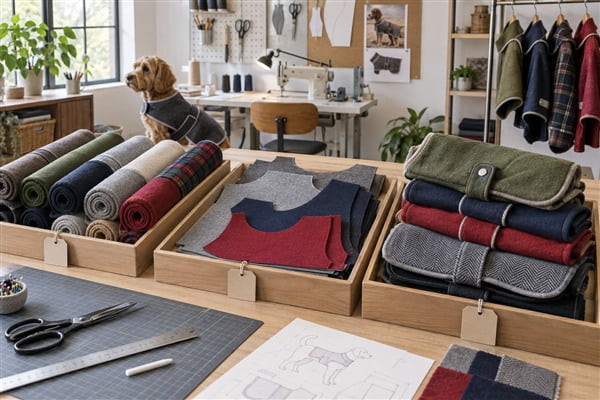
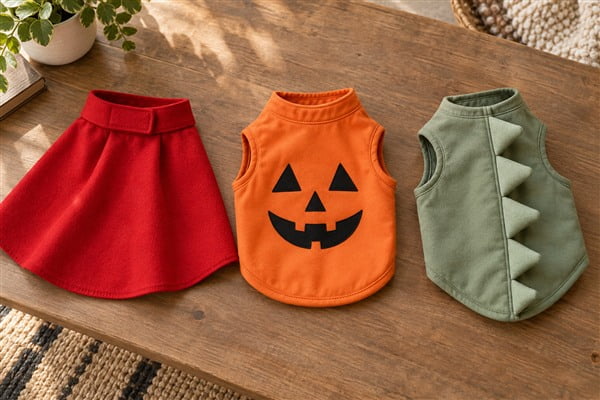
When choosing a pet clothing manufacturer, establish who owns the technical specification and how design changes are recorded. The decision between existing styles versus custom apparel development matters because modifying an existing jacket can change the arrangement that earlier evidence describes.
What should a flotation report explain?
Request the sample identity, size, materials, conditioning, procedure, measurements, observations, acceptance criteria, and limitations. Ask how the foam remains positioned after use and whether the test considered the complete jacket rather than an isolated material sample.
A qualified specialist should define an appropriate evaluation plan for the intended use. Ask which body profiles and size boundaries were assessed and how normal movement and head position were observed. Avoid treating dog weight as the only explanation of fit or flotation behavior.
Ruffwear Float Coat specifications offers an example of product-specific feature, sizing, and care information. It is a reference for the level of documentation to request, not evidence that another supplier’s jacket performs equivalently.
How should handles, straps, and buckles be checked?
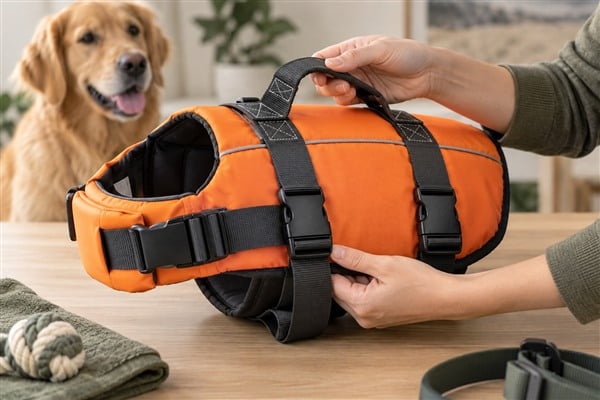
Inspect the entire force path from the top handle through its reinforcement and supporting straps. A strong loose buckle cannot establish the strength of the assembled jacket. Agree loading direction, conditioning, test setup, and failure criteria with the testing provider.
ASTM D6775 webbing test method concerns webbing breaking strength and elongation. ASTM D1683 for woven sewn seams covers relevant woven sewn-seam behavior. These component methods can inform a program, but the finished assembly still needs evaluation against its intended function.
Review customization options before approving changes to handle position, webbing width, buckles, or foam layout. Record component codes rather than accepting “same quality” substitutions. Establish whether the handle is intended only for brief assisted recovery and what instructions support that use.
What happens after repeated use?
Check closure function, strap adjustment, foam retention, seam condition, and visible damage after the agreed conditioning sequence. Use defined exposures relevant to the intended environment rather than an undocumented soak or an arbitrary demonstration.
For metallic parts, ISO 9227 salt-spray methods provides corrosion test procedures; exposure duration and acceptance limits still need specification. The ASTM textile test-method directory helps identify relevant fastener methods. Passing one material test does not establish an overall service life.
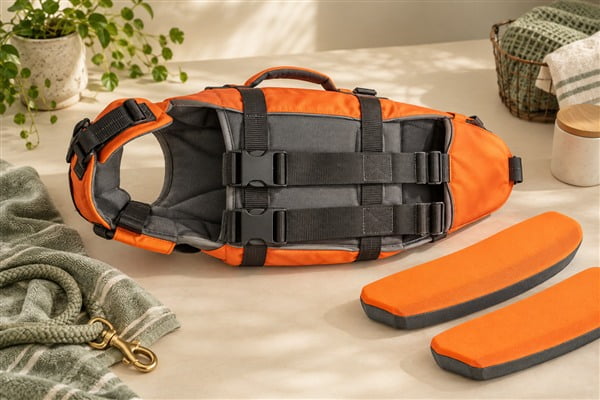
Record cleaning and drying instructions that reflect the actual materials. Require the supplier to identify what changes trigger retesting, including foam source, panel dimensions, stitching, closures, and assembly sequence.
How should quality control connect samples to bulk?
Build evidence review into the sample development process. Keep the approved sample, component list, revision record, and reports together. Ask how incoming foam, strap dimensions, stitching, buckles, and finished measurements are checked during production.
Review manufacturing capabilities against this control plan. When selecting external testing support, ISO/IEC 17025 laboratory guidance provides context for laboratory competence; confirm that the relevant method is within the laboratory’s actual scope. Accreditation alone is not a certificate for your product.
Agree defect definitions, inspection responsibilities, sample selection, and escalation before ordering. Report a changed component before shipment, not after a failure. Traceability should connect each production lot to the approved construction and any authorized deviations.
Frequently Asked Questions
Is a test video enough?
No. A video can support observations, but request the procedure, sample identity, measurements, criteria, and limitations needed to interpret it.
Can one size represent the entire range?
Only where the testing plan provides a defensible basis. Different foam layouts, proportions, and strap configurations may require additional assessment.
For a development discussion grounded in documented requirements, contact FungoMate with your intended use, size range, market, and proposed product claims.