
An outdoor dog jacket starts as a brand idea: a muted color palette, a particular silhouette, or a promise of comfortable walks in wet weather. Production needs more. Buyers expanding a pet apparel range should translate that idea into measurable decisions before comparing quotations.
A useful production brief defines the wearing scenario, fit range, materials, construction, performance checks, and approval process. A reference photo explains the look; the specification explains what must be repeated.
What should the first page of the brief say?
Describe the intended climate, activity, selling channel, price position, and customer. Separate essential functions from optional styling. A lightweight rain layer, insulated winter coat, and fleece walking jacket should not share an undefined “outdoor” specification.
When choosing a pet clothing manufacturer, ask how the supplier turns these requirements into a bill of materials and measurement sheet. Comparing existing styles versus custom apparel development also helps establish whether an existing block is suitable or new pattern work is needed.
List the target size range, planned colorways, estimated quantities, packaging, and launch date. Mark which requirements are fixed and which can change after sampling. This gives the developer room to propose realistic alternatives without silently removing a feature that defines the product.
How do you turn style into a fit specification?
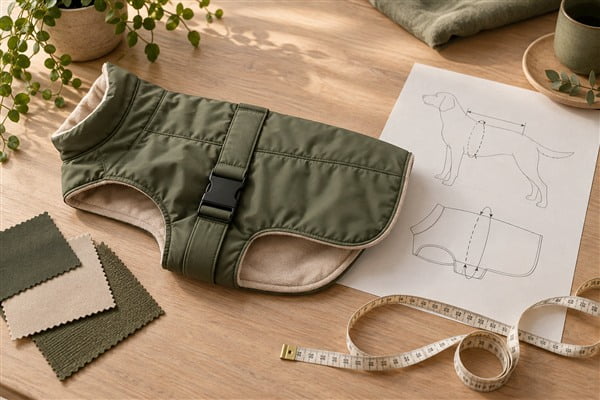
Define neck, chest, back length, belly coverage, and closure overlap. The AKC measuring guide provides a useful measurement reference. Distinguish the dog’s dimensions from the garment’s finished measurements, and state how each point is measured.
Specify whether the jacket sits over a harness, how the leash connection is accessed, and which body profiles the range targets. Check sitting, walking, and normal leg movement. Do not assume that increasing every dimension by one percentage produces a reliable size range.
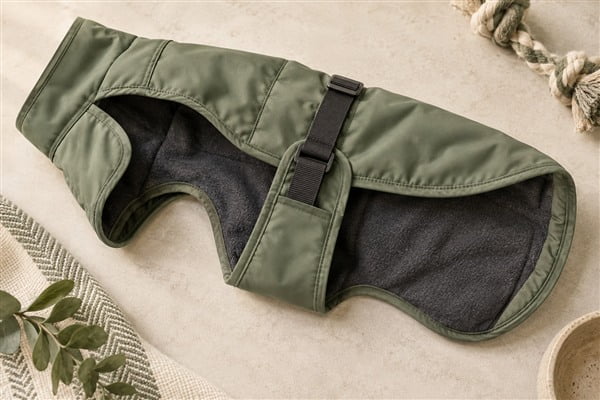
Include a drawing showing seam locations, strap routing, openings, labels, and trim placement. Review customization options as a connected design: changing lining thickness, shell stretch, or closure width may affect the pattern rather than simply changing appearance.
Which performance claims need separate checks?
Replace vague terms with the property to be assessed. Surface wetting and resistance to water penetration are different questions. The AATCC test-method directory lists spray testing, while AATCC TM127 addresses hydrostatic pressure. Neither alone demonstrates that every finished jacket seam and opening excludes rain.
Agree the required method, sample condition, result format, and acceptance criteria with the testing provider. Check the complete garment where the intended claim depends on seams, closures, or construction. Do not convert a fabric supplier’s result into a broader garment guarantee.
For durability, discuss ASTM D1683 for woven sewn seams where the fabric construction fits its scope. The ASTM textile test-method directory also identifies zipper strength and operability methods. Select relevant procedures rather than filling the brief with unrelated standard numbers.
What should happen after washing?
Use a defined care sequence. ISO 6330 washing and drying procedures provides washing and drying procedures, and the ISO 5077 dimensional-change method addresses dimensional change. Record the selected conditions instead of requesting an unexplained “wash test.”
Compare the cleaned sample with its original measurements and appearance. Check closure alignment, lining movement, seam puckering, print condition, and the fit of any harness opening. Review ISO 3758 care-label symbols when preparing instructions, and ensure the stated care matches the validated construction.
How do you approve the production version?
Build clear gates into the sample development process: concept review, fit sample, size review, material confirmation, and preproduction approval. Record the revision number, approved bill of materials, measurements, workmanship requirements, packaging, and unresolved issues at each stage.
Confirm which checks the supplier’s manufacturing capabilities can perform internally and which require an outside laboratory. Set tolerances for individual measurement points, define defects, and agree the response to failed checks. A signed sample is useful only when its specification is equally clear.
Before placing the order, compare quotations against the same construction. Identify development charges, testing scope, material minimums, replacement lead times, and assumptions about packing. A lower unit price may describe a different jacket unless those details are aligned.
Frequently Asked Questions
Is a mood board enough for sampling?
It helps communicate styling, but add measurements, intended use, required features, material direction, and target cost so the first sample answers useful questions.
Can the shell change after fit approval?
Possibly, but thickness, stiffness, and stretch can affect fit and sewing. Review the change and repeat the relevant checks before bulk approval.
To turn your concept into a comparable development brief, contact FungoMate with reference images, target customers, quantities, and the functions your jacket must deliver.